Swords
The suit of Swords governs the air element — thought, communication, conflict, and truth. Its 14 cards trace air's Golden Dawn decan attributions through Gemini, Libra, and Aquarius, tarot's three air zodiac signs. Swords has a reputation as tarot's most difficult suit, largely because so many of its cards depict genuine mental struggle — anxiety, betrayal, painful decisions — but that reputation undersells its actual function: Swords is the suit of clarity, and clarity is frequently uncomfortable before it's useful.
→ Explore swords symbolism further on SymbolHubs
Element and Core Theme
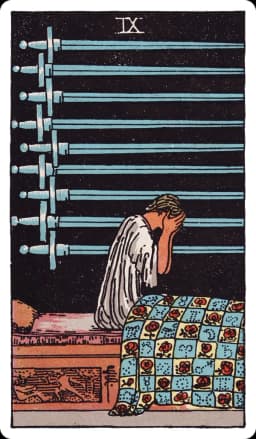
Air, in most symbolic systems, represents what can't be touched but genuinely shapes everything else — thought, language, belief, the internal narrative a person tells themselves about their own circumstances. Swords cards are unusually verbal and cognitive for a tarot suit: where Cups shows feeling and Pentacles shows material objects, Swords repeatedly shows minds at work, sometimes clearly (the Ace's single cutting insight) and sometimes badly, trapped in a distorted or anxious loop of their own making (the Eight and Nine of Swords especially). This is the suit most concerned with the gap between perception and reality — several of its hardest cards (the Eight, the Nine, reversed Seven) describe a person's own thinking, not external circumstance, as the actual source of difficulty. That makes Swords tarot's most psychologically self-referential suit: more than the other three, it asks a querent to examine their own mental narrative rather than only their external situation. Air's rulership across the suit's decans includes Jupiter, Mars, Sun, Venus, Saturn, and Moon in various Gemini, Libra, and Aquarius combinations, reflecting how thought itself can be expansive, sharp, indecisive, harmonious, restrictive, or intuitive depending on which specific card and decan is in play — a reminder that 'mental' doesn't mean uniform, since the mind moves through as many different registers as feeling or ambition do.
How the Group Is Structured
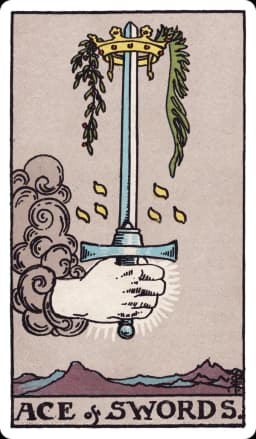
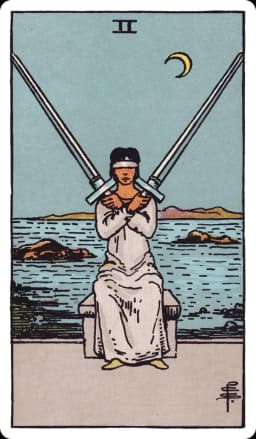
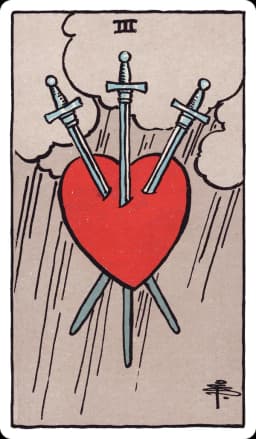
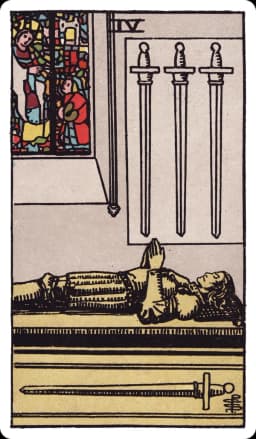
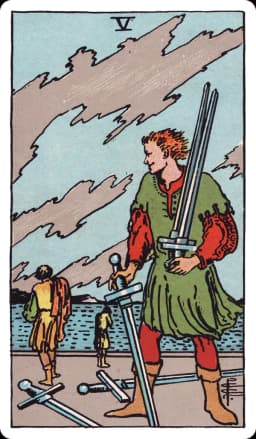
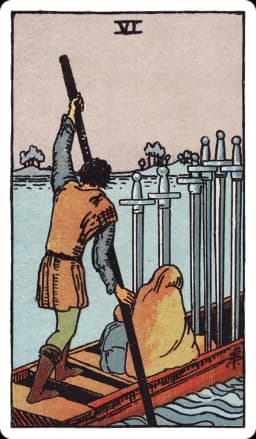
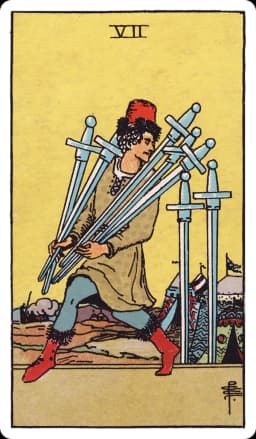
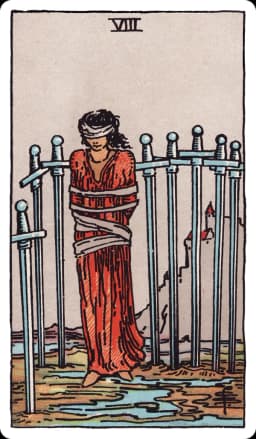
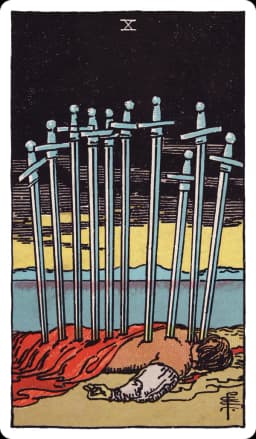
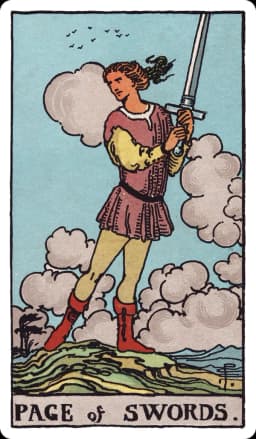
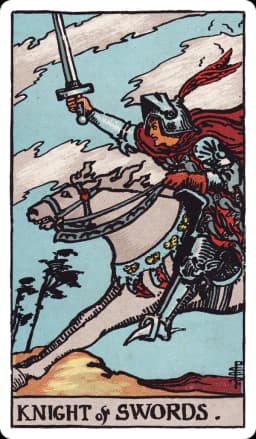
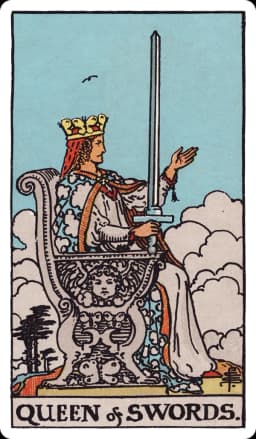
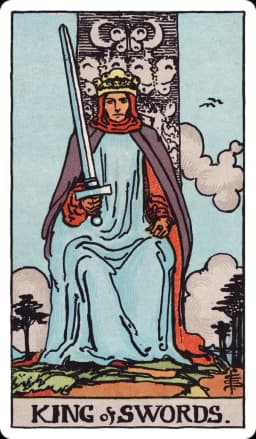
The suit's numbered arc moves through a genuine mental journey with real difficulty concentrated in its middle. The Ace offers a single, cutting moment of clarity or truth. Two presents a stalemate, a decision deliberately avoided. Three names heartbreak and grief directly and without euphemism. Four calls for rest and recovery after real strain. Five depicts a hollow, costly victory, winning in a way that damages the winner. Six describes a difficult but necessary transition away from turbulence. Seven introduces deception, working around a problem rather than confronting it directly. Eight and Nine sit at the suit's psychological low point — a largely self-imposed trap, and an anxious, sleepless mental spiral — before Ten marks a definitive, if painful, ending that at least closes the difficulty rather than prolonging it. The four court cards then describe air's temperament at different levels of maturity: the Page as an inquisitive but sometimes overeager beginner, the Knight as fast, direct, sometimes combative pursuit of a goal, the Queen as sharp, independent clarity that's learned from real hardship, and the King as intellectual authority that reasons with genuine, disciplined fairness. Read end to end, the suit's arc is less steadily favorable than the other three and more genuinely difficult through its middle stretch — which is exactly why Swords rewards patience: its hardest cards (Eight, Nine, Ten) are also where its core lesson about facing reality honestly, rather than avoiding it, lands with the most weight.
Reading These Cards Together
A cluster of Swords cards in a spread is usually a signal to look closely at a person's own thinking rather than assuming the difficulty being described is purely external — several of this suit's cards (the Eight and Nine especially) describe internally generated struggle more than they describe genuinely fixed circumstances. When multiple Swords numbers appear together, check whether they cluster around the suit's harder middle stretch (Five through Nine) or its calmer opening and closing cards (Ace through Four, or the Ten's decisive if painful resolution) — a cluster in the middle often signals someone genuinely stuck in an unresolved mental or interpersonal conflict, where cards from the opening and close together can describe a difficult passage that's already found its way to some kind of resolution. A Swords court card beside a Swords number card often shows that mental temperament actively navigating the specific difficulty the number describes — an anxious energy near the Nine of Swords, for instance, reinforces rather than eases the card's already-difficult message, worth naming directly rather than softening. Checked against other suits, Swords paired with Cups often signals a conflict between what someone thinks and what they feel, while Swords paired with Wands can describe clear thinking finally being matched with the will to actually act on it.
Cards in this group
Notable Cards Worth a Closer Look
A handful of Swords cards carry the suit's clearest lessons, either because they're commonly misread as worse than they actually are, or because they mark the suit's real psychological turning points.
- Eight of Swords — the suit's clearest example of a largely self-imposed trap — read closely, its restriction is more perceptual than physical.
- Ten of Swords — widely feared but often misread — it marks a definitive ending, not an ongoing catastrophe, and the sunrise in its own artwork points past the difficulty depicted.
- The Star — not a Swords card at all — it's a Major Arcana card — but it's the traditional relief valve after this suit's hardest stretch, arriving (via the Tower) with the clarity Swords spends its whole arc working toward.
- The Devil — another Major Arcana card worth knowing alongside this suit, since its self-imposed bondage is a close cousin to the Eight of Swords' largely perceptual trap — useful for telling the two apart.
- Two of Swords — the suit's clearest image of a decision being actively avoided rather than genuinely unresolved — the blindfold in its artwork is deliberately reversible the moment its wearer actually chooses to look.
Common Questions
Is Swords really the deck's 'worst' suit to draw?
It has a reputation for difficulty because several of its cards depict real mental struggle, but its actual function is clarity, not misfortune. Many of its harder cards (the Eight especially) carry a genuinely hopeful undertone once their full message is understood.
Why does Swords come up so often in anxious or overthinking situations?
Because the suit's core territory is thought itself, including thought that's become distorted, anxious, or stuck in a loop. It's the suit most likely to name a person's own mental narrative as the actual subject of a reading, rather than only their external circumstances.
What's the difference between the Eight and Nine of Swords?
The Eight describes a trap that's largely perceptual — real options exist but feel invisible. The Nine describes the anxious, often sleepless mental spiral that can accompany a difficult situation, less about a trap's actual structure and more about the exhausting experience of dwelling in worry.
What's a good first Swords card to study closely?
Learning the Ace alongside the Ten works well — a single moment of cutting clarity at one end, a definitive, closing ending at the other, bookending the suit's harder middle stretch.
Is it true Swords court cards are read more harshly than other suits' courts?
They're often read as sharper or more combative, particularly the Knight and King, since air's rulership leans toward decisive, sometimes blunt communication rather than the warmth Cups courts carry or the steadiness Pentacles courts show. That reputation is only half the picture, though — the Swords Queen in particular is frequently read as one of the deck's most genuinely honest, clear-eyed court figures, someone whose directness comes from real, hard-earned clarity rather than simple coldness. As with the suit generally, Swords courts reward looking past the sharper surface impression.