Minor Arcana · Swords
Six of Swords
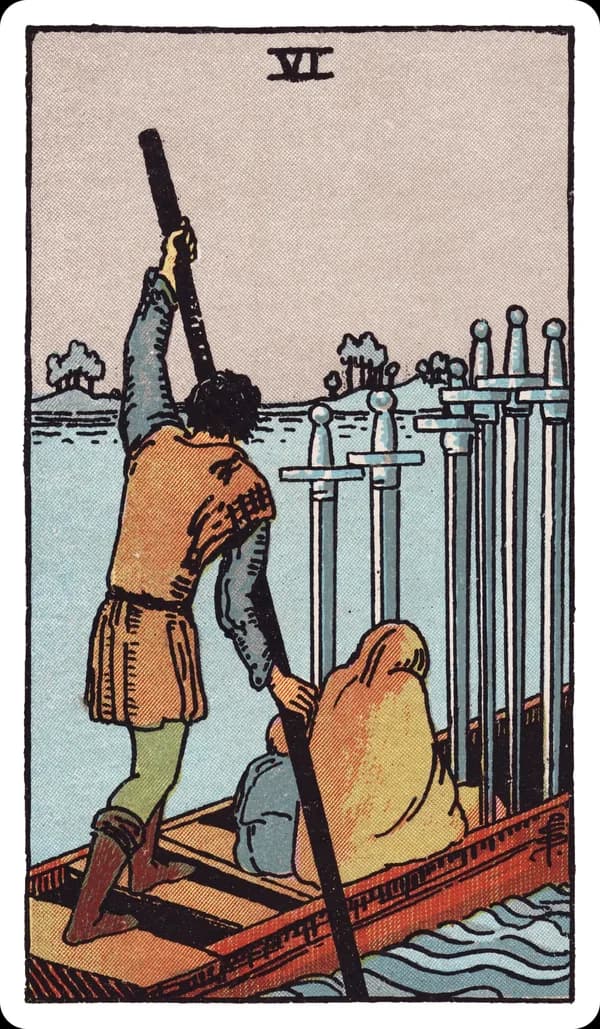
The Six of Swords shows passage rather than conflict, a quiet departure rather than the suit's more frequent scenes of struggle. A ferryman stands at the back of a small boat, poling it steadily forward, while a cloaked woman and a child sit low and still near the bow, their postures heavy with something unspoken. Six swords stand upright between them and the ferryman, planted in the boat rather than raised against anyone, cargo being carried rather than weapons being wielded. The water behind the boat is choppy and disturbed; the water ahead is glassy and calm, and the visual contrast between the two is the whole card in miniature. Nothing about the scene is dramatic or fast, there's no urgency in the ferryman's pose, only steady, unhurried progress toward something visibly better than what's being left. Where the Five of Swords ends a fight with a hollow, lonely win, the Six of Swords picks up sometime after, once the fighting is over and the only task left is actually getting away from it.
- Element
- air
- Ruling planet / sign
- Mercury in Aquarius
- Suit
- swords
Numerology: Golden Dawn title "Lord of Earned Success" — Mercury's guidance settling into Aquarius' forward-looking detachment describes movement chosen with a clear head rather than fled in panic. Six restores balance after the Five's hollow victory, the suit's first real relief since the Four's enforced rest.
Upright Meaning
Upright, the Six of Swords describes a necessary transition away from a difficult period, a move, literal or otherwise, that trades a rough, unstable situation for calmer water, even if the destination isn't yet fully in view. It favors leaving when leaving is genuinely called for: this card rarely shows up encouraging someone to stay in a situation that's actively costing them, its whole energy is forward motion toward something better. It's a card of gradual relief rather than dramatic rescue, the water ahead is calm but the boat hasn't arrived yet, progress that takes real time rather than resolving instantly. It often marks literal travel, relocating, changing environments, physically removing yourself from a place associated with hardship, though its deeper meaning extends to any shift away from mental or emotional turmoil toward a steadier state. The swords still standing in the boat are an honest detail: this card doesn't promise the difficulty is fully processed or resolved, only that real progress away from its sharpest edge is genuinely underway.
Reversed Meaning
Reversed, the Six of Swords most often describes resistance to a transition that's actually needed, staying anchored in rough water out of fear, familiarity, or simple inertia, even once continuing to stay has stopped serving any real purpose. It can point to unresolved baggage specifically, carrying old pain, old patterns, or old resentments into a new chapter without ever actually setting them down, which tends to recreate the same difficulty in a new setting rather than genuinely leaving it behind. A second reversed reading involves a stalled transition, a move or a change that's been started but not completed, stuck partway between the rough water and the calm, neither fully in the old situation nor genuinely in the new one. It can also describe forcing a departure before you're actually ready, leaving prematurely in a way that doesn't allow enough real processing of what happened first. Sorting the two usually starts with what's actually stuck: refusing to leave at all points toward resistance, while leaving without genuinely letting go points toward unprocessed baggage instead.
Read the full reversed meaning →Symbolism
The water split between rough and calm is the card's central image, and it does something most transition cards don't: it shows the difficulty as already behind the travelers rather than still ahead of them. That ordering matters, this isn't a card about bracing for hardship, it's a card about having survived it and now being in the slower, quieter work of putting real distance between yourself and it. The six swords standing upright in the boat, rather than being used or discarded, suggest the difficulty is being carried along rather than left entirely behind, unresolved feelings, memories, lessons, that travel with the passengers even as the physical distance grows. The huddled postures of the woman and child read as grief or exhaustion rather than fear, people worn down by whatever came before rather than actively threatened in the present moment. The ferryman himself is a classical image with old roots, a guide who moves others across water they couldn't easily cross alone, and his calm, steady poling suggests this transition, while real and necessary, doesn't have to be undertaken entirely without help.
The Six of Swords from the Rider-Waite-Smith deck: a ferryman poles a small boat carrying a cloaked woman and a child across calm water toward a distant shore, six swords standing upright in the boat behind them, the water they've left choppy and the water ahead smooth.
→ See what Mercury in Aquarius means in your horoscope on GetMyHoro
→ Find your own life-path number on NumberAngel
In Love
In a love reading, the Six of Swords often describes a relationship, or a chapter within one, moving toward calmer water after a genuinely difficult stretch, a rough patch survived, a painful ending processed enough to move forward from. For someone single, it can mark leaving behind a difficult dating pattern or a painful past relationship, not necessarily forgetting it entirely, but gaining enough distance to approach new connection from a steadier place than before. It favors gradual healing over instant resolution, this card rarely promises immediate relief, only real, visible progress in the right direction. Partnered, it often marks a relationship moving past a hard chapter together, an argument, a crisis, a difficult season, into calmer, more stable territory, the difficulty not fully forgotten but no longer actively rocking the boat. Reversed, the reading turns toward resistance to a needed ending, staying in a relationship or a pattern well past the point it's stopped serving anyone, or carrying old relationship wounds into a new connection without ever having genuinely set them down first.
Read the full love meaning →In Career
At work, the Six of Swords frequently describes leaving a difficult job, team, or situation for calmer professional waters, a transition that trades real instability for something steadier, even if the new role or direction isn't yet fully settled. It favors a considered, gradual departure over an abrupt one, this card's energy is steady poling rather than a sudden leap, suggesting a transition handled with some care rather than pure impulse. It can also describe relocating for work, physically moving to a new city or environment as part of leaving a difficult professional chapter behind. Reversed, the career reading points toward staying in a role or situation that's actively costing you, out of fear of the unknown or simple inertia, even once the reasons to leave have become fairly clear. It can also describe a professional transition that's stalled partway, having given notice or started a job search without actually following through, or bringing old professional resentments and patterns into a new role without ever having genuinely processed and released them from the last one.
Read the full career meaning →Money & Health — Reflection Themes
Money: As a theme for financial reflection, the Six of Swords upright can describe moving toward greater financial stability after a genuinely difficult stretch, a debt gradually being paid down, a financial crisis slowly resolving into calmer, steadier ground. It favors patient, gradual progress over a dramatic financial turnaround, this card's relief tends to arrive steadily rather than all at once. It can also describe a literal financial transition tied to relocation, moving to reduce costs, changing your financial circumstances by changing your physical environment. Reversed, it can point to financial stagnation, staying in a costly or unstable financial situation out of familiarity or fear of change, even once the reasons for a shift have become clear. It can also describe carrying old financial patterns or anxieties into a genuinely improved situation, unable to fully relax into new stability because old scarcity thinking hasn't been set down, or a financial transition that's been started, a move, a new budget, a debt plan, without ever actually being followed all the way through to completion.
Health: As a theme for reflection, the Six of Swords upright can describe gradual healing after a genuinely difficult period, physical or emotional recovery that's steadily underway even if it isn't complete yet, real progress toward calmer, steadier ground. It favors patience with a slow recovery process, this card rarely describes instant healing, its relief comes through steady, ongoing movement rather than a single dramatic turning point. It can also describe the specific benefit of a literal change of environment on wellbeing, a new setting, a change of scenery, genuinely supporting recovery from a difficult stretch. Reversed, the same card can flag stagnation in a healing process, staying stuck in old, unhelpful patterns around health out of familiarity rather than genuine benefit, or carrying old health-related anxiety into a period that's actually improved, unable to relax into real progress because old fear hasn't been fully released. No specific condition attaches to this card; the useful distinction here is between healing that's genuinely underway and a transition that's stalled partway.
Spiritual Meaning
A boat moving from rough water into calm, with the traveler's own hand steadily on the pole rather than at the mercy of the current, offers a genuinely useful spiritual image for intentional, gradual healing. Many spiritual traditions treat this kind of steady transition, away from an old, difficult chapter and toward a calmer one, as its own legitimate form of growth, distinct from dramatic breakthrough but no less real for being quieter and slower. The card rewards trusting a gradual process rather than demanding instant peace, since the swords still standing upright in the boat are an honest acknowledgment that healing doesn't require the difficult past to vanish entirely, only to stop actively steering the course. Reversed, the spiritual reading shifts toward resistance to a genuinely needed transition, remaining anchored in old pain out of familiarity, or a spiritual shift that's been started, a new practice, a new perspective, without ever being fully embraced, leaving the traveler stranded somewhere between the old water and the new.
Yes or No?
For yes/no questions, the Six of Swords leans toward 'yes,' specifically for questions about whether moving forward, away from a current difficulty, is the right call. This card's whole scene depicts a considered, steady transition toward calmer circumstances, which makes it a favorable answer to questions about leaving a job, a relationship, or a situation that's become genuinely unstable. Its yes comes with a built-in timeline caveat, the boat is moving but hasn't arrived, so the relief this card promises tends to be gradual rather than immediate, worth remembering if the question is really about how soon things improve rather than whether they will. Reversed, the yes weakens considerably, toward either 'not yet, something's still keeping you anchored' or 'the move has already started but hasn't been completed.' Where that caution applies, the more useful question is what specifically is preventing the transition from actually finishing, old attachment, unresolved grief, practical logistics, since naming that blockage tends to be more productive than assuming the situation is simply stuck for good.
Read the full yes-or-no breakdown →Frequently Asked Questions
Who are the two passengers in the Six of Swords boat?
The figures are traditionally read as a mother and child, or more broadly as someone being guided through a difficult transition, though the card doesn't specify their exact identity. Their huddled, subdued posture suggests exhaustion or grief rather than active danger, people who've already been through something hard rather than currently fleeing it.
Does the Six of Swords mean I should move somewhere new?
It can describe literal relocation, but its meaning extends more broadly to any transition away from a difficult situation toward calmer circumstances. Whether that means an actual move depends on the rest of your spread and your specific question.
Why are the swords still standing in the boat instead of being left behind?
The swords traveling along with the passengers suggest the difficulty isn't being fully forgotten or resolved, only carried at a distance rather than actively wielded. It's a realistic detail: this card describes progress away from hardship, not the complete erasure of what happened.
Is the Six of Swords a good card to draw?
Generally favorable, it describes genuine relief and forward motion after a difficult period, even though that relief is gradual rather than instant. It's one of the more hopeful cards in a suit that spends much of its imagery on conflict and difficulty.
Related Cards

Spreads that read Six of Swords
- Three-Card Spread — 3 positions, beginner
- Horseshoe Spread — 7 positions, intermediate
- Shadow Work Spread — 5 positions, advanced
Where Six of Swords sits in the deck
Card correspondences sourced from the Hermetic Order of the Golden Dawn tradition — see our methodology.