Minor Arcana · Swords
Nine of Swords
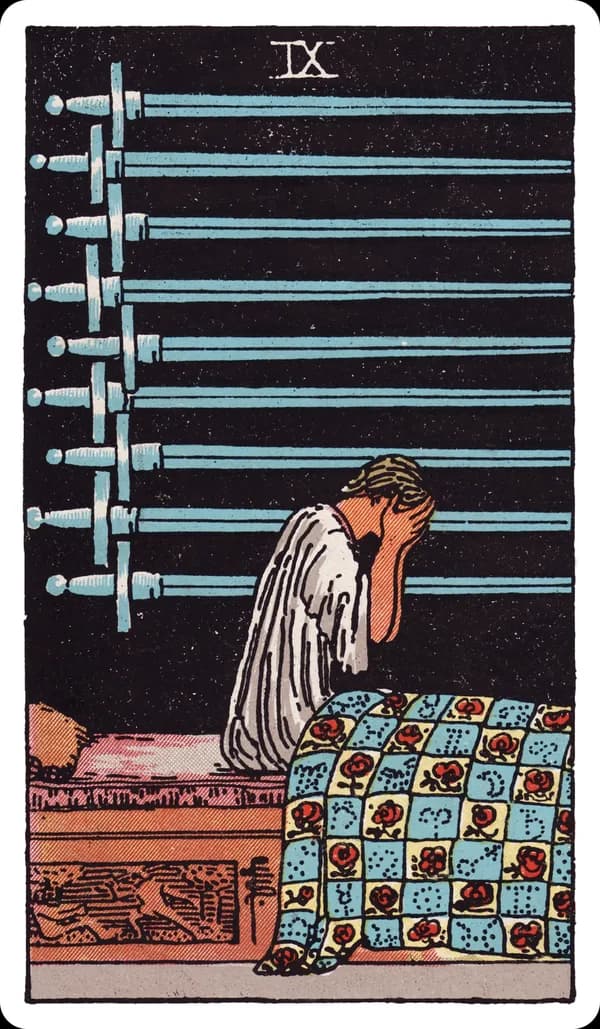
The Nine of Swords is the deck's clearest single image of the specific hour when worry takes over completely, a figure sitting bolt upright in bed, face buried in both hands, surrounded by darkness on every side. Nine swords hang mounted horizontally on the wall behind them, evenly spaced, deliberate, less a weapon rack than a wall of accumulated, specific fears, each one distinct rather than blurred into one general dread. The quilt covering the lower half of the bed is patterned with roses and astrological symbols, a small, almost incongruous detail of beauty and order sitting directly beneath a scene of total distress, easy to miss entirely given where the eye is drawn first. A carved panel at the foot of the bed shows one figure attacking another, sometimes read as a nightmare's residue, sometimes as an old wound the mind keeps returning to uninvited. Nothing in the room is actually attacking the figure in this exact moment. The threat, whatever it is, lives entirely in the space between the ears, replaying, amplifying, refusing to let the hour pass quietly.
- Element
- air
- Ruling planet / sign
- Mars in Gemini
- Suit
- swords
Numerology: Golden Dawn title "Lord of Despair and Cruelty" — Mars' sharp aggression turned inward through Gemini's restless duality describes a mind attacking itself rather than any outside target. Nine, the suit's near-completion number, here becomes almost the opposite of relief, a mind that can't yet see the ending it's actually close to.
Upright Meaning
Upright, the Nine of Swords describes genuine anxiety, worry, or mental anguish, often at its most acute, a mind caught in a loop of fear that feels total even when the actual, external threat is considerably smaller than the internal distress it's producing. It favors taking that distress seriously rather than dismissing it, this card doesn't suggest the worry is baseless or that the person should simply calm down, it takes the reality of the suffering at face value while gently distinguishing it from the reality of the underlying situation. It frequently shows up during sleepless nights, recurring worry that returns most powerfully in the quiet, unguarded hours, or a specific fear that's been turned over so many times it's worn a deep groove in the mind. It can also describe guilt or shame contributing to that mental anguish, an old mistake or hurt replaying rather than resolving. The nine swords fixed on the wall rather than actively striking is worth holding onto here: the worst-case scenario being rehearsed this intensely has, more often than the fear suggests, not actually happened yet, and often won't in the specific, catastrophic form being imagined.
Reversed Meaning
Reversed, the Nine of Swords most often describes anxiety finally beginning to lift, not necessarily because the underlying situation has fully resolved, but because the mind's grip on catastrophic rumination is loosening enough for some real relief to enter. It favors seeking support specifically: reaching out to a therapist, a trusted friend, or a genuine source of help, since this card's isolation, one figure alone with nine private fears, often needs an outside presence to interrupt, rather than resolving purely through internal effort alone. It can describe hope returning after a genuinely difficult stretch of despair, the first real light after a long, dark night. A second, more cautious reversed reading involves anxiety that's still present but starting to be actively managed, therapy begun, a coping strategy finally being used, even if the worry hasn't fully resolved yet. A third, harder reading describes anxiety that's deepened into something closer to depression or genuine crisis, worth taking seriously and, if this reflects your own situation, worth speaking with a qualified mental health professional about directly rather than relying on a card reading alone.
Read the full reversed meaning →Symbolism
The nine swords mounted on the wall, rather than being wielded or thrown, are the image's central and most telling choice: they're not active threats in this moment, they're a fixed, contemplated collection, worries returned to again and again rather than dangers currently unfolding. That distinction matters enormously for how the card is read, this is a scene of anticipation and rumination, not of an attack actually underway. The figure's covered face is doing real work too, hands over eyes rather than reaching for the swords or the door, a posture of being overwhelmed rather than one of active defense or escape, someone caught entirely inside their own mind rather than responding to anything genuinely present in the room. The roses and astrological symbols on the quilt are frequently read as a reminder that beauty, order, and a wider, calmer context still exist even in this darkest hour, present but currently unnoticed by someone whose attention has narrowed entirely to the nine fears on the wall. The carved panel of one figure attacking another suggests old pain, a past hurt or a recurring nightmare, resurfacing and coloring the present moment's anxiety even though the original event, whatever it was, isn't actually happening again right now.
The Nine of Swords from the Rider-Waite-Smith deck: a figure sits upright in bed at night, head buried in both hands, nine swords mounted horizontally on the dark wall behind them, the quilt below decorated with roses and astrological symbols, a carved panel on the bed showing one figure attacking another.
→ See what Mars in Gemini means in your horoscope on GetMyHoro
→ Find your own life-path number on NumberAngel
In Love
In a love reading, the Nine of Swords often describes real anxiety about a relationship, worry that circles at night, replaying a difficult conversation, imagining the worst about where things stand, fear that frequently outpaces what's actually known to be true. For someone single, it can describe anxious rumination about dating itself, a fear of being permanently alone that's grown disproportionate to the actual situation, or worry about a specific person's feelings that keeps circling without resolution because it's never actually been asked about directly. For someone partnered, it frequently marks anxiety about the relationship's stability, worry about a partner's fidelity, commitment, or feelings that may be genuinely warranted or may be considerably larger than the real situation supports, worth checking honestly against actual evidence rather than the worst-case story anxiety tends to generate on its own. This card rarely resolves the underlying question on its own; its real message is to notice how much of the current suffering comes from rumination itself rather than from confirmed fact. Reversed, the reading turns toward that anxiety finally easing, often through an honest conversation that replaces imagined fears with real information, or through outside support helping process worry that had become genuinely overwhelming to carry alone.
Read the full love meaning →In Career
At work, the Nine of Swords frequently describes real anxiety about job security, performance, or a specific professional mistake that keeps replaying at night regardless of how much it's actually likely to matter in the light of day. It favors distinguishing realistic professional concern from anxiety that's outgrown the situation, worth checking honestly whether the fear reflects genuine, confirmed risk or a worst-case scenario that's been rehearsed so many times it feels more certain than it actually is. It can also describe the specific exhaustion of a demanding, high-stress role that leaves little room for the mind to rest even outside of work hours, worry following you home and into sleep. Reversed, the career reading points toward that anxiety finally easing, whether through a direct conversation that clarifies an ambiguous situation, through actively seeking support, a mentor, a therapist, an honest conversation with a manager, or through genuinely stepping back from a workload that's been generating disproportionate mental strain. It can also describe recognizing that a feared professional outcome, a firing, a failure, a public mistake, was significantly less catastrophic in reality than the anticipation of it had been.
Read the full career meaning →Money & Health — Reflection Themes
Money: As a theme for financial reflection, the Nine of Swords upright can describe genuine financial anxiety, worry about debt, security, or a specific financial fear that circles at night and feels larger than the actual numbers may support once actually reviewed calmly. It favors checking that anxiety against real information: often, looking directly and honestly at the actual financial picture, rather than continuing to avoid it out of fear, reduces the anxiety even when the underlying numbers themselves aren't yet fully resolved, since uncertainty itself tends to fuel this card's particular brand of worry more than the confirmed facts usually do. Reversed, it can point to financial anxiety finally easing, through direct action, a budget actually made, a conversation with a financial advisor actually had, or through recognizing that a feared financial catastrophe was considerably less severe in reality than the anticipation of it had been. It can also describe seeking real support around a financial fear that had become too heavy to carry through worry alone, without ever actually confronting the specific numbers behind it.
Health: As a theme for reflection, the Nine of Swords upright often points directly to anxiety and its physical toll, sleepless nights, racing thoughts, the specific exhaustion of a mind that won't quiet down even when the body is finally still. It can describe health-related worry specifically, anticipating a diagnosis, replaying a symptom, catastrophizing an outcome that hasn't actually been confirmed by anyone qualified to confirm it. It favors taking that anxiety seriously as its own genuine concern, worth real support and attention, rather than treating it as simply a minor inconvenience attached to some other, more legitimate issue. Reversed, the same card can flag anxiety finally easing, through therapy, through medical clarity replacing feared uncertainty, or through actively developed coping strategies genuinely starting to help. It can also describe a harder reading, anxiety having deepened into something requiring real, direct professional support. This card carries no link to any specific physical condition; its territory is squarely the mental and emotional toll of anxiety itself, worth taking as seriously as any physical concern it may accompany.
Spiritual Meaning
A single figure alone with nine private fears in the dark hours is one of the deck's most honest images of a specific, universal kind of suffering, the mind turned entirely against itself, replaying worst cases with no outside perspective available to interrupt the loop. The Nine of Swords tends to show up spiritually during a genuine dark night, a period where despair or anxiety feels total, worth taking seriously rather than spiritually bypassed with forced positivity that doesn't actually address the depth of what's being felt. It rewards seeking real connection and support during this stretch, since isolation tends to deepen this particular kind of suffering rather than resolve it, community and honest conversation doing work that solitary rumination generally can't. Reversed, the spiritual reading shifts toward the first real light after genuine darkness, not necessarily full resolution, but real, tangible relief and the beginning of a path back toward a steadier relationship with your own mind.
Yes or No?
For yes/no questions, the Nine of Swords leans toward 'no,' though the reasoning matters more than the verdict itself: this card describes anxiety and worst-case thinking, and drawing it in response to a specific question often reflects the anxiety attached to that question more directly than it reflects the actual likely outcome. It's a genuine caution against a favorable, worry-free result, and worth taking that caution seriously rather than dismissing it, but it's also worth separating the fear itself from the situation's actual, confirmed facts before assuming the worst is settled and certain. It's a weaker signal for questions that are already confirmed to involve real, external hardship, since this card's specific territory is anticipatory suffering rather than a hardship already fully underway. Reversed, the verdict shifts meaningfully toward relief: the situation you were anxious about is often less catastrophic than feared, or real support and help are already becoming available, worth treating as a genuinely hopeful sign even if full resolution hasn't fully arrived yet.
Read the full yes-or-no breakdown →Frequently Asked Questions
Does the Nine of Swords mean something bad is definitely going to happen?
Not necessarily, its core territory is anxiety and worst-case rumination, which is often considerably more severe than the actual likely outcome. The nine swords are mounted on the wall rather than actively striking, a deliberate detail suggesting the feared event hasn't happened, and often won't in the exact catastrophic form being imagined.
Is the Nine of Swords about nightmares specifically?
It's commonly associated with nightmares and disturbed sleep, yes, though its broader meaning covers any intense anxiety or mental anguish, whether it appears during sleep or in anxious, wakeful rumination. The bedroom setting emphasizes the specific way worry tends to intensify in the quiet, unguarded hours.
What's the difference between the Nine of Swords and the Ten of Swords?
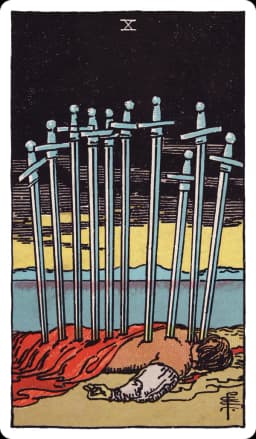
The Nine of Swords describes anticipatory suffering, fear of something that hasn't happened yet. The Ten of Swords describes something that's already, definitively concluded. In some readings, the Nine's dread is actually worse than the Ten's resolution, since at least the Ten marks a clear, if painful, endpoint.
Should I seek help if I keep drawing the Nine of Swords?
If this card reflects genuine, ongoing anxiety or distress in your real life, it's worth taking that seriously and speaking with a qualified mental health professional, a card reading is reflection and entertainment, not a substitute for real support. The card itself often points toward seeking that kind of help as part of its own reversed meaning.
Related Cards
Spreads that read Nine of Swords
- Celtic Cross Spread — 10 positions, advanced
- Yes or No Spread — 3 positions, beginner
- Self-Love Spread — 4 positions, beginner
- Past Life Spread — 5 positions, advanced
- Goal-Setting Spread — 5 positions, beginner
Where Nine of Swords sits in the deck
Card correspondences sourced from the Hermetic Order of the Golden Dawn tradition — see our methodology.