Minor Arcana · Swords
Three of Swords
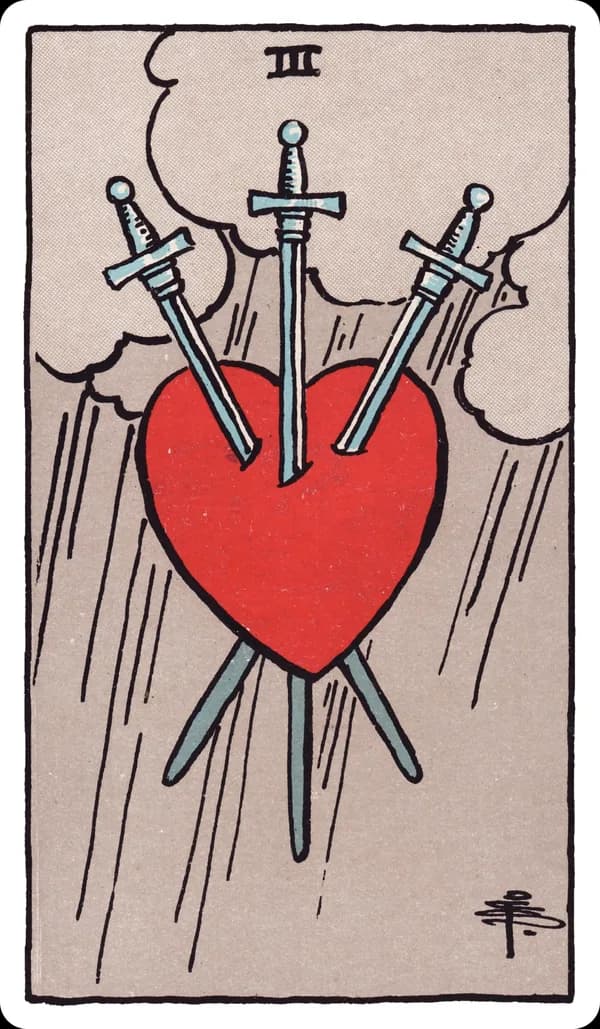
The Three of Swords is one of the few cards in the deck built from a single, unadorned symbol rather than a populated scene: a grey heart, suspended with no visible body attached to it, pierced through by three swords arranged so their points converge near its center. Above and around it, the sky is heavy with storm clouds, and rain falls in slanted lines across the whole image, as though the weather itself is responding to whatever the heart just absorbed. There is no human figure in the frame — a deliberate choice that widens rather than narrows the card's meaning, since the heart could belong to anyone drawing the card, and the specific cause of the wound is left entirely open. Where the Two of Swords depicts a decision not yet made, the Three of Swords depicts a wound that already has been — the moment of impact itself, not the aftermath and not the lead-up. It is, by most tarot readers' consensus, the deck's single clearest image of heartbreak: sudden, sharp, and impossible to talk yourself out of feeling.
- Element
- air
- Ruling planet / sign
- Saturn in Libra
- Suit
- swords
Numerology: Golden Dawn title "Lord of Sorrow" — Saturn's weight and discipline meeting Libra's decan turns this card into the suit's clearest picture of pain that has to be carried honestly rather than reasoned away.
Upright Meaning
Upright, the Three of Swords describes genuine heartbreak — not a minor disappointment, but a real, often sudden hurt: a betrayal discovered, a relationship ending, a painful truth finally spoken out loud after being avoided. The card doesn't soften this. Where several other Swords cards describe mental confusion or a difficult decision still being weighed, the Three of Swords describes something that has already happened and can't be undone by more thinking. Its presence in a reading is rarely subtle — it tends to name pain the person asking already feels, rather than predicting something new. That said, the card carries an honest, if cold, comfort: the sharpest form of this pain is usually also the most honest, since it typically comes from a truth finally surfacing rather than staying hidden. In readings about a relationship, a friendship, or a professional betrayal, this card asks you to actually feel the grief rather than intellectualize past it, since the storm depicted is doing real, necessary work even while it's unpleasant to be standing in.
Reversed Meaning
Reversed, the Three of Swords most often describes healing beginning — the storm passing rather than the storm arriving, pain that's being processed and released rather than freshly inflicted. This is one of the more genuinely hopeful reversed cards in the deck when read this way: the sharpest part of a heartbreak has already happened, and what's showing up now is the slow work of moving through it rather than around it. It can mark forgiveness, whether of someone else or of yourself, arriving after a period of real anger or grief. A second, less comfortable reading also applies: reversed can describe pain being suppressed rather than released — old grief that's been pushed down and denied rather than actually processed, which tends to resurface later in a harsher form than if it had been allowed to move through in the first place. Distinguishing the two usually comes down to time and surrounding cards: enough distance from the original wound plus cards suggesting calm point toward genuine healing; a wound still recent plus cards suggesting numbness or avoidance point toward suppression instead.
Read the full reversed meaning →Symbolism
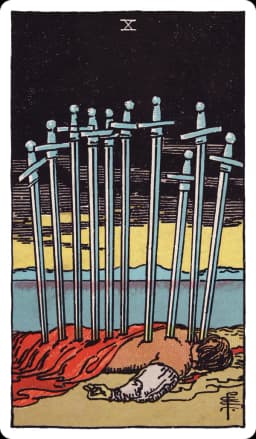
Three swords, not one, is the detail that separates this card from a simpler wound: the pain it depicts arrives from multiple directions or multiple sources at once, rarely a single clean cut. Some readers count the swords as three specific kinds of pain layered together — betrayal, loss, and the grief that follows both — though the exact count matters less than the image's overall message that this hurt is compounded rather than singular. The heart itself is grey rather than the traditional red of romantic imagery, a muted, almost bloodless color that some readers take as a sign the pain has moved past the initial shock into something more numb and enduring. The storm clouds and driving rain are among the most literal weather symbols in the whole deck — grief expressed outwardly rather than contained, matching the old, cross-cultural association between rain and tears. Unlike the Ten of Swords, which shows a body lying face-down with the damage already done and stillness setting in, the Three of Swords shows the heart still suspended mid-air, the wound still fresh and active rather than settled.
The Three of Swords from the Rider-Waite-Smith deck: a grey heart floating against a slate sky is pierced through by three swords in a triangular arrangement, dark storm clouds gather above and rain falls in slanted lines across the whole scene.
→ See what Saturn in Libra means in your horoscope on GetMyHoro
→ Find your own life-path number on NumberAngel
In Love
In a love reading, the Three of Swords is one of the more unambiguous cards for genuine heartbreak — a breakup, an affair discovered, or a painful truth about a relationship finally spoken aloud after being sensed for a while. For someone single, it can describe grief still being carried from a past relationship that hasn't fully healed, sometimes surfacing in a reading about a new connection as a sign old pain is coloring how it's being approached. For someone partnered, it frequently marks a specific wound: words that can't be unheard, trust broken in a way that has to be reckoned with directly rather than smoothed over. The card doesn't necessarily mean the relationship is over — some relationships survive a Three of Swords moment and come out more honest for having weathered it — but it does mean the pain has to actually be acknowledged rather than minimized. Reversed, the reading turns toward recovery: grief that's being processed, forgiveness becoming possible, or the first real relief after a difficult period finally arriving, even if some tenderness around the original wound remains.
Read the full love meaning →In Career
At work, the Three of Swords can describe a genuinely painful professional moment: harsh feedback that lands hard, a betrayal by a colleague or business partner, or the sharp disappointment of a project, promotion, or opportunity falling through after real investment. It's a card that names real hurt rather than minor frustration — worth taking seriously rather than talking yourself out of feeling. It can also point to a difficult but necessary truth being delivered about your work, one that stings specifically because part of you already suspected it was true. Reversed, the career reading usually points to recovery from that kind of professional wound: rebuilding trust with a team after a conflict, recovering confidence after a setback, or reaching a place of genuine acceptance about an opportunity that didn't work out. It can also describe an old professional hurt being suppressed rather than actually processed — powering through a real setback without giving it the acknowledgment it needs, which tends to resurface later as burnout or resentment rather than staying resolved.
Read the full career meaning →Money & Health — Reflection Themes
Money: Financial disappointment sits at the center of this card's money reading — an investment that didn't pay off, an unexpected loss, or a hard financial truth (a debt, a shortfall, a broken agreement) finally being confronted directly instead of avoided. The Three of Swords upright doesn't soften this: the reading is meant to acknowledge real pain around money rather than paper over it with forced optimism. It's often specifically about betrayal in a financial sense — being let down by someone you trusted with money, whether a partner, a business associate, or a family member, and having to reckon honestly with what that costs beyond the dollar figure itself. Reversed, the card usually points to recovery from that kind of financial hurt: rebuilding after a loss, restoring trust in a shared financial arrangement, or finally making peace with a setback that felt devastating at the time. It can also describe financial grief being avoided rather than processed — refusing to look honestly at a loss, which tends to make the eventual reckoning with it harder rather than easier.
Health: As a theme for reflection, the Three of Swords upright often points to grief with a genuine physical dimension — the particular ache, tightness in the chest, or exhaustion that real emotional pain produces in the body, not metaphorically but literally. It can describe receiving hard health-related news, or the emotional toll of an ongoing health situation finally catching up after being pushed aside in favor of just coping. The card doesn't ask you to move past this quickly; its honest message is that this kind of pain needs to be felt rather than managed around, since suppressing it tends to cost more later. Reversed, the card usually marks genuine healing beginning: the sharpest part of a difficult period passing, emotional pain finally being processed rather than carried silently, or the first real relief after a hard stretch. It can also point to grief or stress being pushed down rather than released, which commonly resurfaces later as tension, fatigue, or a harder emotional crash than if it had been allowed to move through at the time it actually happened.
Spiritual Meaning
A storm this direct rarely gets read as anything but real in a spiritual context, and the Three of Swords resists the temptation to spiritually bypass genuine pain — its clearest message is that some grief has to be moved through rather than transcended or reasoned away. Many traditions treat heartbreak as a legitimate spiritual teacher, not despite the pain but because of it: a wound this sharp tends to strip away illusions about a relationship, a plan, or a version of yourself that wasn't fully true, leaving something more honest behind once the storm passes. The rain falling steadily across the whole image is sometimes read as cleansing rather than purely destructive, tears that clear something out rather than simply damage. Reversed, the spiritual reading turns toward the far side of that process: forgiveness, whether of another person or yourself, becoming genuinely possible once enough of the grief has actually been felt rather than avoided. Skipping straight to forgiveness without first letting the storm do its work tends to produce a shallower peace than one earned by actually sitting through the pain.
Yes or No?
For yes/no questions, the Three of Swords upright leans toward a blunt 'no' — few cards in the deck state a negative outcome this plainly. This card's core meaning is a painful truth or a real disappointment, which rarely lines up with the outcome someone is hoping to hear when they draw it for a yes/no question. If your question concerns whether a relationship, a deal, or a hoped-for outcome will go the way you want, this card is a fairly clear caution that the honest answer involves real disappointment. It's worth taking seriously rather than hoping the rest of the spread overrides it, since this particular card rarely appears as a minor caveat. Reversed, the reading softens somewhat toward 'the worst has already happened and healing is starting' rather than a flat no about the future — if the pain the question concerns is already in the past, a reversed Three of Swords can mean recovery is genuinely underway rather than more hurt still coming. The honest use of this card either way is less about a yes/no verdict and more about preparing to face a real, difficult truth directly rather than avoiding it.
Read the full yes-or-no breakdown →Frequently Asked Questions
Does the Three of Swords always mean a breakup?
Not always, though heartbreak in some form is close to its core meaning. It can describe a breakup, but it can just as easily describe a painful truth in a friendship, a professional betrayal, or grief unrelated to romance at all. The common thread is real emotional pain, whatever the specific source.
Why does the heart have no body attached to it?
The lack of a figure is a deliberate design choice shared across most versions of this card — it keeps the wound universal rather than tied to one specific person's story, letting whoever draws the card recognize their own grief in it rather than someone else's.
Is reversed Three of Swords always a good sign?
Usually, though not automatically — it most often signals healing and recovery, but it can also describe grief being suppressed rather than genuinely processed. Whether the reversed reading is positive depends on whether real time and honest feeling have actually passed since the original wound.
How is the Three of Swords different from the Five of Cups?
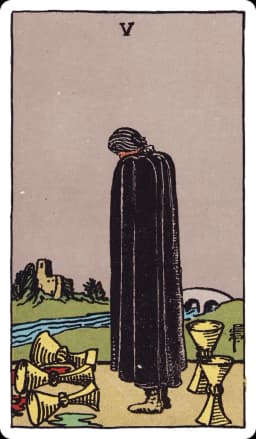
Both involve grief, but the Three of Swords is sharper and more sudden — the moment of the wound itself. The Five of Cups is more about the aftermath: dwelling on a loss, unable yet to see what remains. The Three of Swords is the storm; the Five of Cups is standing in the wreckage afterward.
Related Cards
Where Three of Swords sits in the deck
Card correspondences sourced from the Hermetic Order of the Golden Dawn tradition — see our methodology.