Major Arcana · Major Arcana
The Devil
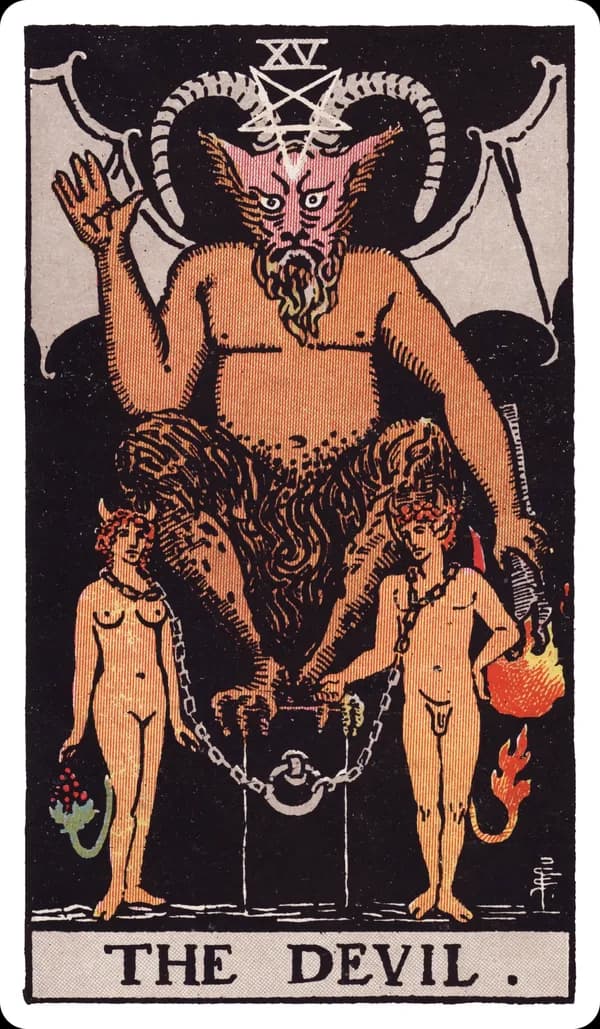
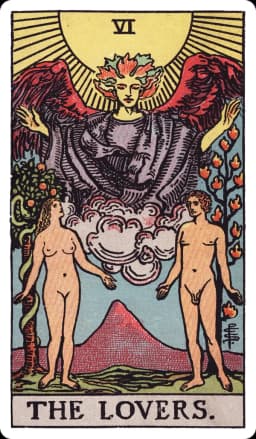
The Devil deliberately echoes the Lovers, and the resemblance is the whole point: a man and woman stand together again, much as they did in card VI, but where that earlier scene showed a free, blessed union under an angel's outstretched arms, this scene shows the same two figures chained to a pedestal beneath a horned, half-goat creature. Numbered XV, the Devil represents the shadow version of the Lovers' conscious choice — attachment, temptation, or a pattern that no longer feels like a decision at all, but a trap. The crucial visual detail, though, is easy to miss: the chains around the couple's necks are loose enough to lift off entirely, and neither figure is actually shown straining against them. This card's central argument is that most of what genuinely binds people isn't an external force imposed on them, it's a pattern of their own making that they've stopped questioning — and that could, in fact, be released at any time, if they were willing to look directly at it.
- Element
- earth
- Ruling planet / sign
- Capricorn
Numerology: Fifteen reduces to six (1+5) and forms a deliberate shadow mirror of the Lovers' six — a bond and a choice, but one built on attachment, fear, or compulsion rather than the earlier card's free, conscious alignment. Where six at card VI represented harmony genuinely chosen, fifteen represents the same relational pull twisted into something closer to captivity.
Upright Meaning
Upright, the Devil represents unhealthy attachment, restriction, or a pattern you've stopped questioning even though it's genuinely limiting you — an addiction, a toxic relationship dynamic, materialism that's crowded out other values, or simply a habit or belief that's become a trap rather than a genuine choice. This card names the discomfort of feeling stuck in something that, on some level, you know isn't serving you, whether that's a substance, a relationship, a job, or a self-defeating pattern of thought. It also carries a strong association with temptation and the seductive pull of something that feels good in the moment but comes with a real cost — the card doesn't moralize about pleasure itself, but it does ask honest questions about what price is actually being paid for it. Capricorn's rulership, an earth sign associated with ambition and material achievement, brings a specific materialistic edge to this card: the Devil often points toward being trapped by attachment to status, money, or possessions rather than only substances or relationships. In a reading, the Devil often shows up as an invitation to look honestly at a pattern you've been avoiding examining too closely — not to shame you for it, but because honest recognition is usually the first real step toward the loose chains actually coming off.
Reversed Meaning
Reversed, the Devil represents the process of recognizing and beginning to break free from a pattern that has held you — the loose chains finally being noticed and lifted rather than continuing to be accepted as fixed. Among the Major Arcana's reversed meanings, this one leans unusually hopeful, often signaling a real turning point where a limiting attachment, habit, or belief is finally being confronted honestly, whether that's leaving an unhealthy relationship, addressing an addiction, or releasing a materialistic or fear-based pattern that's been running your decisions without your full awareness. A second, more cautionary reading applies when the reversal describes a still-incomplete process: awareness of a trap without yet having the strength or clarity to fully release it, understanding intellectually that a pattern is unhealthy while still being pulled back into it repeatedly. A third reading points to confronting a genuine shadow pattern directly — facing an uncomfortable truth about your own behavior, motivations, or attachments that you've been avoiding, which is often the necessary precursor to actually breaking free. What matters most here is whether the reading describes genuine liberation already underway, or the harder, still-unfinished work of recognizing a pattern honestly enough to eventually release it.
Read the full reversed meaning →Symbolism
The inverted pentagram glowing on the Devil's forehead is a deliberate mirror of the pentagram sometimes associated with human aspiration pointed upward; here, inverted, it represents that same energy turned toward material, base, or compulsive ends instead of higher purpose. The downward-pointing torch in the Devil's hand, in contrast to the Star card's figure who pours water generously outward later in the sequence, suggests a kind of energy directed inward and consumingly rather than shared or renewing. The small tails on the chained man and woman — one tipped with flame, one with a cluster of grapes — are widely read as symbols of unchecked lust and overindulgence respectively, echoing the fire and grapevine imagery found in Bacchanalian mythology. The black cube the Devil sits on represents materialism and rigidity, the opposite of the fluid, adaptable qualities found in cards like Temperance just before it. Most important of all is the loose fit of the chains around the couple's necks: this detail is consistently read by tarot scholars as the card's central message — the bondage this card depicts is largely self-imposed and therefore self-releasable, a trap of habit, fear, or denial rather than a literal, inescapable prison.
The Devil from the Rider-Waite-Smith deck: a horned, half-goat figure with bat wings sits on a black cube pedestal, an inverted pentagram glowing on its forehead, holding a downward-pointing torch, while a naked man and woman stand chained loosely at the pedestal's base, their chains visible but slack enough to remove, small tails — one ending in fire, one in grapes — visible behind them.
→ See what Capricorn means in your horoscope on GetMyHoro
→ Find your own life-path number on NumberAngel
In Love
A relationship touched by the Devil upright often centers on unhealthy attachment — a bond that's become more about compulsion, dependency, or fear of being alone than genuine connection, or a pattern of jealousy, control, or codependency that both people have stopped questioning even though it's clearly limiting them. Single, this card can point toward being drawn repeatedly to a type of person or dynamic that isn't actually healthy, a pattern of attraction rooted in familiarity or old wounds rather than genuine compatibility. Partnered, it often signals a relationship where real intimacy has been replaced by attachment, possessiveness, or simply the fear of what leaving would mean — a bond held together more by habit or dependency than by active, freely chosen love. It can also point toward a purely physical or intensely passionate connection that lacks the deeper alignment the Lovers card represents. Reversed, the caution shifts toward genuine hope: recognizing and beginning to release an unhealthy relationship pattern, finally naming a toxic dynamic honestly, or the harder, still-in-progress work of understanding why you keep returning to a connection you already know isn't good for you, even while you haven't yet fully broken away from it.
Read the full love meaning →In Career
At work, the Devil often points toward feeling trapped in a job, role, or professional pattern that no longer serves you but continues out of fear, financial dependency, or simple habit — golden handcuffs, a toxic workplace dynamic tolerated because leaving feels too risky, or ambition that's become compulsive rather than genuinely fulfilling. This card carries Capricorn's materialistic edge specifically into professional life: it can point toward being trapped by attachment to salary, status, or title even when the actual day-to-day work has stopped being meaningful. It can also describe a workplace dynamic — a controlling manager, an unhealthy competitive culture, an addiction to overwork — that has become normalized even though it's genuinely limiting your wellbeing. As coworker or manager energy, the Devil describes a controlling or manipulative dynamic, someone who uses fear, dependency, or material leverage to keep others compliant rather than earning genuine loyalty. Reversed, the caution turns hopeful: recognizing and beginning to break free from a professional trap — finally leaving a toxic job, confronting a manipulative colleague, or releasing an unhealthy attachment to status or overwork that's been driving your decisions without you fully realizing it. It can also describe the harder, still-unfinished work of understanding why you've stayed somewhere unhealthy for so long.
Read the full career meaning →Money & Health — Reflection Themes
Money: As a theme for financial reflection, the Devil upright often points toward materialism or a financial dependency that's become limiting: spending or debt driven by compulsion rather than genuine need, attachment to status or possessions that's crowding out other priorities, or a financial arrangement — a joint account, a business partnership, a family dependency — that's become a trap rather than a genuine choice. This card names the discomfort of a financial pattern you know isn't serving you but continues out of habit or fear of what changing it would require. Reversed, watch for the hopeful side: recognizing and beginning to break free from an unhealthy financial pattern — addressing debt honestly, releasing a materialistic attachment that's been driving unsustainable spending, or finally confronting a financial dependency that's limited your real autonomy. It can also describe the still-unfinished, harder work of understanding why a financial pattern has held on so long, even after you've intellectually recognized it isn't working.
Health: This card can point toward an unhealthy pattern involving your body or mind that's become compulsive rather than chosen — an addiction, a habit that provides short-term relief but real long-term cost, or a relationship to food, substances, or your own body that's rooted more in compulsion than genuine care. It names the discomfort of recognizing a pattern you know isn't serving your wellbeing but continue out of habit, denial, or fear of what change would require. Reversed, the reading turns hopeful: recognizing and beginning to release an unhealthy pattern, whether that's seeking real support for an addiction, confronting a compulsive behavior honestly, or finally naming a self-destructive habit clearly enough to start actually changing it. Worth noting this card carries no fixed diagnosis and doesn't specify any particular condition; its meaning here is about your relationship to compulsive or limiting patterns generally.
Spiritual Meaning
A man and woman stand chained to a pedestal beneath a horned figure, but the chains around their necks are loose enough to lift off entirely — a detail tarot scholars read as the card's whole argument: most of what genuinely binds people is self-created through fear, denial, and unexamined attachment, meaning liberation is available the moment someone is willing to look directly at what's actually holding them. Rather than treating this purely as a negative force, many traditions read this card as an essential, if uncomfortable, stage of genuine spiritual growth: real integration and freedom require honestly facing your own shadow rather than pretending it doesn't exist, since what's denied tends to have more power over you, not less. As the fifteenth numbered trump, following Temperance's careful balance, it marks a direct confrontation with whatever shadow material still needs facing before real freedom becomes possible. Pulling this card tends to call for honest, unflinching self-examination of a pattern you've been avoiding looking at directly.
Yes or No?
For yes/no questions, the Devil leans toward a cautionary 'no' — specifically because this card names patterns rooted in unhealthy attachment, compulsion, or restriction rather than genuine, freely chosen benefit. If your question concerns whether to pursue or continue something this card is describing (a relationship dynamic, a financial arrangement, a habit), the honest answer is usually that the situation, as currently structured, isn't actually serving your genuine wellbeing, however appealing or familiar it feels in the moment. It's a weaker fit as a simple no for a question about facing or naming a difficult truth, which the card actually encourages rather than discourages. Reversed, the answer shifts toward a more hopeful, conditional yes: breaking free from the pattern this card describes is genuinely possible, and reversed Devil often signals that the process of liberation is already underway or newly available, provided you're willing to actually face what's been holding you rather than continue avoiding it. In that reversed case, the honest read becomes 'yes, freedom is available, but only once the pattern is confronted honestly rather than denied.'
Read the full yes-or-no breakdown →Frequently Asked Questions
Does the Devil card mean something evil is happening?
No — despite the unsettling imagery, this card doesn't represent literal evil or supernatural danger. It represents unhealthy attachment, restriction, temptation, or a limiting pattern you've stopped questioning, most of which is self-imposed rather than an external force acting on you.
Why are the chains in the Devil card loose?
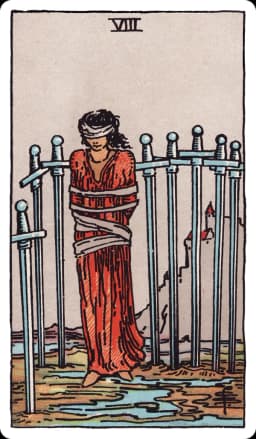
Compare it to the Eight of Swords, where the blindfolded figure literally cannot see the gaps in her own restraints. Here the couple's eyes are open and the chains are visibly loose, a harder, more pointed message than the Eight of Swords offers: this isn't a restriction you can't perceive, it's one you've simply stopped looking at directly.
What's the difference between the Devil and the Lovers?
They're deliberately paired: the Lovers (card VI) shows a couple in a freely chosen, blessed union, while the Devil (card XV) shows a visually similar couple bound by attachment, fear, or compulsion rather than free choice. The Devil is often read as the shadow or trapped version of the same relational bond the Lovers represents.
Is reversed Devil always a good sign?
It's one of the few reversed majors most readers treat as net-positive by default, but the two stages inside it feel different to actually live through: the first stage, naming the pattern out loud, often feels worse before it feels better, since denial was doing real emotional work. Relief tends to arrive at the second stage, once concrete action is underway.
Related Cards
Where The Devil sits in the deck
Card correspondences sourced from the Hermetic Order of the Golden Dawn tradition — see our methodology.