Major Arcana · Major Arcana
The High Priestess
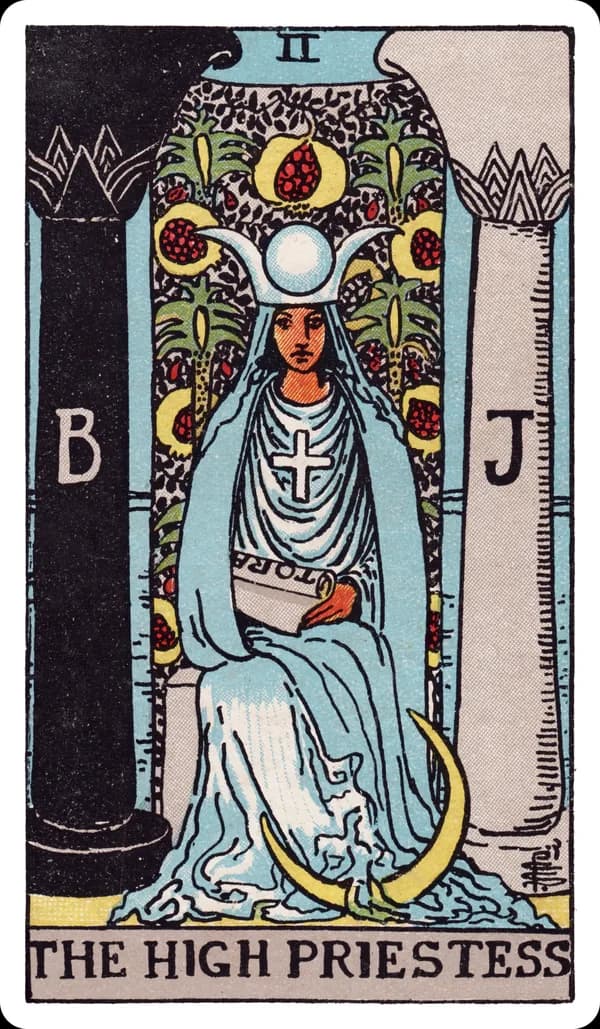
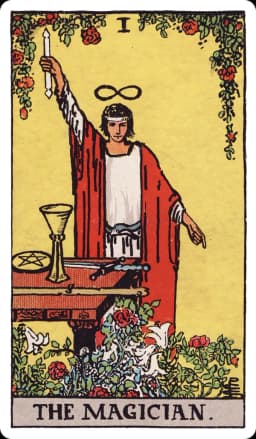
The High Priestess sits between two pillars — one black, marked B for Boaz, one white, marked J for Jachin, the names of the two bronze pillars said to have stood at the entrance of Solomon's Temple — and that placement is the card's whole argument in a single image: she is the threshold between what is visible and what is hidden, and she is not inviting you past it. A veil patterned with pomegranates hangs behind her, obscuring whatever lies beyond, and a scroll marked TORA rests in her lap, only partly unrolled, as if the knowledge it holds is available but not yet fully revealed. Unlike the Magician's active, table-full-of-tools confidence, the High Priestess does nothing visible in the artwork at all — she simply sits, watches, and holds what she knows. That stillness isn't passivity; in tarot's traditional reading, it's a different kind of power, one based on withholding, listening, and trusting an inward sense of things rather than pushing outward to make something happen.
- Element
- water
- Ruling planet / sign
- Moon
Numerology: Two is the number of duality held in balance rather than resolved — receptive, reflective, and paired rather than singular. Where the Magician's one is a single will acting outward, the High Priestess's two is stillness holding two truths (conscious and hidden, spoken and unspoken) at once without forcing them together.
Upright Meaning
Upright, the High Priestess is tarot's clearest single card for trusting what you sense but can't fully explain. She shows up in readings about a decision where the facts alone aren't enough — where a gut feeling, a dream, or a quiet unease is carrying real information the logical case hasn't caught up to yet. This card asks you to listen rather than analyze, to sit with a question rather than force an answer, and to trust that some knowledge arrives on its own schedule rather than on demand. She's also associated with genuinely hidden information: something not yet revealed, a secret (yours or someone else's) that hasn't surfaced, or simply a situation where more will become clear later than is visible now. Unlike the Magician's decisive, table-full-of-tools energy, the High Priestess counsels patience over action — in a reading where every other card points toward doing something, her presence is often a signal to wait, watch, and let your own intuition finish forming before you commit.
Reversed Meaning
Reversed, the High Priestess's stillness curdles into disconnection — from your own intuition specifically, not from information generally. It frequently shows up when someone is overriding a gut feeling with pure logic, talking themselves out of a sense they can't fully justify on paper, or staying so busy and noise-filled that the quiet inner signal this card represents simply can't be heard. It can also point to secrets that are actively being withheld rather than merely not yet revealed — information someone (possibly you) is deliberately keeping hidden, sometimes for good reason, sometimes out of fear or control. A third reading applies to repressed feelings: emotions pushed down and unacknowledged rather than genuinely processed, which tend to surface indirectly (irritability, physical tension, a vague unease) when they aren't given room upright. What the reading is actually about tends to settle which pattern fits — a decision points toward intuition being ignored; a relationship or situation points toward information being concealed; a personal, internal question points toward feelings not yet let in.
Read the full reversed meaning →Symbolism
The crescent moon at her feet and the horned lunar headdress crowning her head both tie the High Priestess directly to her ruling planet, the Moon — the traditional tarot symbol for intuition, the subconscious, and cycles that can't be rushed or fully controlled by will alone. The solar disc set between the horns of her headdress is a small but deliberate detail: even this card of hidden, lunar knowing carries a trace of the sun's clarity within it, suggesting that intuition and reason aren't fully opposed so much as one operates in daylight and the other in shadow. Her blue robe, the color most associated with calm depth and water throughout the deck, reinforces her elemental attribution; a solar cross on her chest is one of several small symbols in this card understood to carry Egyptian and alchemical undertones layered into Smith's design. The pomegranates on the veil behind her are a traditional symbol of fertility and the underworld (echoing the Persephone myth), suggesting the veil doesn't hide nothing — it hides something specifically fruitful, knowledge or insight that's real and worth eventually uncovering, just not yet, and not through force.
The High Priestess from the Rider-Waite-Smith deck: a robed woman sits enthroned between two pillars marked B and J (Boaz and Jachin), a veil embroidered with pomegranates hanging behind her, a crescent moon resting at her feet, a horned lunar headdress with a solar disc crowning her head, a solar cross on her chest, and a partially-hidden scroll marked TORA resting in her lap.
→ See what Moon means in your horoscope on GetMyHoro
→ Find your own life-path number on NumberAngel
In Love
In love, the High Priestess upright often marks a connection built on something unspoken and real rather than on grand declarations — a mutual understanding, a sense of knowing someone before they've fully explained themselves, or trusting your own read on a relationship even without a clear conversation confirming it. For someone single, she can describe patience: not chasing, not forcing a connection into existence, but trusting your own instincts about who and what actually feels right when it arrives. For someone partnered, this card can point to a relationship with real emotional depth beneath the surface, or to an intuitive closeness that doesn't always need words. She's also, notably, one of the cards most associated with secrets in a romantic reading — sometimes your own unspoken feelings, sometimes information a partner or love interest hasn't yet shared. Reversed, the caution sharpens: ignoring a clear gut feeling about someone because the surface facts look fine, staying quiet about something important that genuinely needs to be said, or a relationship where real feelings on one or both sides are being suppressed rather than expressed. It can also describe someone actively withholding something from you that changes how you'd read the relationship if you knew it.
Read the full love meaning →In Career
At work, the High Priestess favors discretion, patience, and trusting your own read on a situation over acting purely on the visible facts. She often shows up when a project or decision isn't ready to be forced — when the wiser move is to gather more information quietly, observe how a situation is actually unfolding, and wait for clarity rather than push for a premature resolution. This card also suits work that draws on genuine insight, research, counseling, or any role where reading between the lines matters more than following a fixed script — she rewards listening closely to what isn't being said in a meeting as much as what is. Reversed, the caution shifts toward information being withheld in a professional context — office politics you're not being told about, a decision being made without your input, or your own instincts about a colleague or opportunity being overridden by wishful thinking or pure logic. It can also describe a talent for insight or research sitting unused because you're not trusting your own read on things, deferring instead to louder or more confident voices in the room even when your quieter assessment was the more accurate one.
Read the full career meaning →Money & Health — Reflection Themes
Money: The Moon's pull toward discernment over action shapes how this card treats money: sitting with a decision rather than rushing it, noticing a quiet sense that a deal isn't quite right — or is quietly promising — before all the facts have surfaced. This is a card of reading a situation carefully rather than actively chasing more income; it favors noticing what a contract or offer isn't saying as much as what it is, and waiting for real clarity before committing significant resources. Reversed, two different problems can hide behind the veil: financial information being withheld from you by someone you're in an arrangement with, or your own reluctance to look closely at a financial picture that feels uncomfortable to face. It can also mean overriding a real instinct — a sense that numbers don't add up — with borrowed optimism or pure spreadsheet logic. Worth naming honestly what you already sense but haven't looked at directly before the next financial step.
Health: This card favors noticing over pushing through: a pattern of fatigue or tension that logic hasn't fully explained yet, a body that may be communicating something worth attention before it becomes impossible to ignore. It suits rest, quiet, and stepping back to actually feel how you're doing rather than defaulting to autopilot. Reversed, the caution flips toward override — dismissing a persistent ache or a low mood because there's no tidy explanation for it, staying so busy that the body's own signals stop registering at all. A related reading concerns feelings pushed down rather than processed, which can surface physically even when the root cause is emotional. None of this points to diagnosis; it's simply a nudge to notice what your own quiet signals have been saying before they get louder.
Spiritual Meaning
Where the Magician acts, the High Priestess withholds — sitting at the threshold of hidden knowledge rather than forcing her way past the veil, which makes her the deck's clearest model for a receptive spiritual practice: meditation, dreamwork, quiet listening, trusting a knowing that doesn't arrive through argument. As the second numbered trump, she follows directly after the Magician's will, suggesting that once you've learned to act deliberately, the next lesson is learning to also listen — holding what's seen and what isn't without collapsing one into the other. Pulling this card tends to mark a season for less doing and more noticing: less demand for certainty right away, more trust that understanding arrives on its own timeline rather than on yours.
Yes or No?
For yes/no questions, the High Priestess is one of the deck's genuinely ambiguous cards, and that ambiguity IS the answer rather than a failure of the reading. She represents information not yet fully available — a situation where the honest response is 'not yet knowable,' not because the outcome is vague in some cosmic sense, but because facts relevant to the question haven't surfaced yet, to you or to anyone involved. Pulling this card for a decision usually means more patience is needed before clarity arrives on its own; forcing an answer now would mean deciding without information the situation is likely to reveal soon enough if you let it. Reversed, the reading turns into a sharper caution: something relevant is being actively withheld, either by another person or by your own reluctance to face a feeling you already sense but haven't admitted. There, the answer isn't more waiting — it's asking honestly what you already know but haven't yet let yourself acknowledge.
Read the full yes-or-no breakdown →Frequently Asked Questions
Why is the High Priestess considered a 'maybe' card instead of yes or no?
Because her core meaning is about information that isn't fully available yet, not about a fixed outcome being good or bad. The honest reading of this card for a yes/no question is usually that the real answer depends on facts or feelings that haven't surfaced yet — patience, not force, is what the card is asking for.
What do the two pillars behind the High Priestess mean?
They're traditionally read as representing the entrance pillars of Solomon's Temple, named Boaz and Jachin, and more broadly as a pair of opposites — light and dark, active and receptive, revealed and hidden — that the High Priestess sits directly between rather than choosing one side of.
Is the High Priestess a card about psychic ability?
She's often associated with intuition in the everyday sense — a strong, reliable gut feeling — rather than a claim about supernatural foresight specifically. Many readers treat her as representing the kind of inner knowing everyone has access to, not a special gift reserved for a few.
What's the difference between the High Priestess and the Moon card?
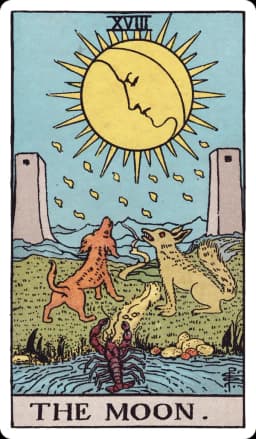
Both share a lunar, intuitive theme, but the High Priestess represents calm, contained inner knowing — a stillness that holds real information — while the Moon (card XVIII) represents a much murkier, more disorienting state of confusion, illusion, and unprocessed fear. The High Priestess is composed; the Moon is unsettled.
Related Cards
Where The High Priestess sits in the deck
- Two of WandsThe Wands card numbered 2
- Two of CupsThe Cups card numbered 2
- Two of SwordsThe Swords card numbered 2
- Two of PentaclesThe Pentacles card numbered 2
- JusticeReduces to the same root number (2)
- JudgementReduces to the same root number (2)
- The ChariotAlso water — Cancer
- The Hanged ManAlso water, among the Major Arcana
Card correspondences sourced from the Hermetic Order of the Golden Dawn tradition — see our methodology.