Minor Arcana · Cups
Two of Cups
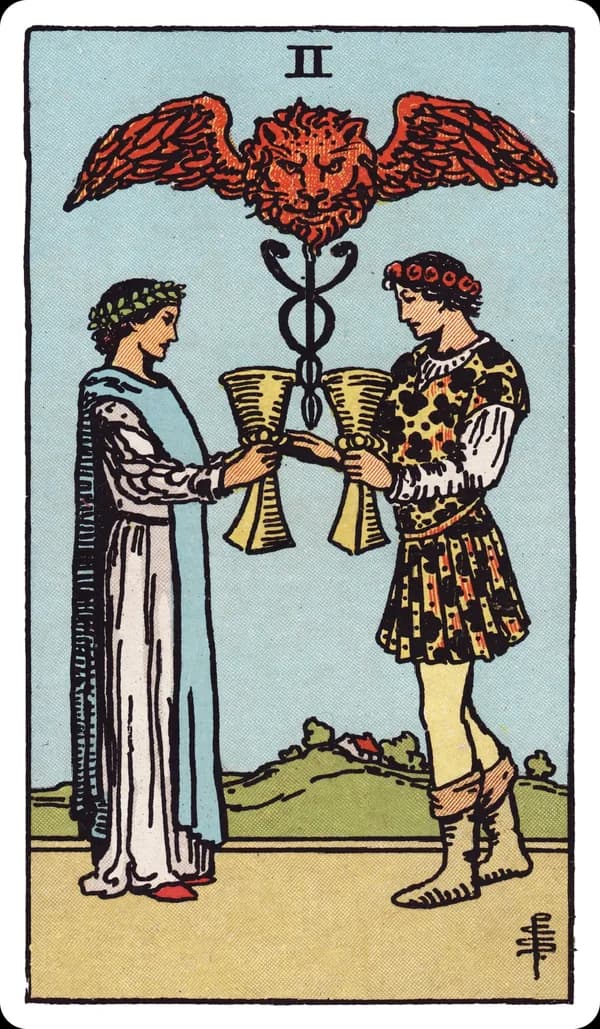
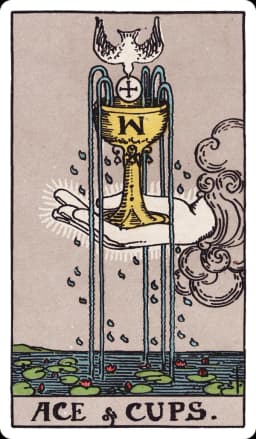
Two figures, matched and facing each other exactly at eye level, are the entire scene of the Two of Cups — a man on the left, a woman on the right, each lifting a cup toward the other in a gesture that reads equally as a toast and as a handshake. Both wear a wreath, hers of leaves and his a laurel-like crown, signaling that neither party outranks the other in this exchange. Between them, rising from a small grassy mound, floats a caduceus — the winged staff wound by two serpents, topped here by a red lion's head sprouting its own pair of wings. The caduceus is Hermes' traditional symbol as a peacemaker between conflicting parties, and the lion's head at its top is usually read as raw passion or instinct, transformed and lifted by the staff's balancing symmetry into something willingly given rather than seized. Where the Ace of Cups shows one open hand offering water to no one in particular, the Two of Cups shows that same water actually being exchanged between two specific people — the suit's raw emotional potential finding its first real direction: a mutual bond, freely entered by both sides at once.
- Element
- water
- Ruling planet / sign
- Venus in Cancer
- Suit
- cups
Numerology: Two is the suit of Cups' first step beyond raw potential into relationship — the Ace's undirected water finding a second vessel to pour into. The Golden Dawn's decanic title for this card is "Lord of Love," pairing Venus with Cancer's own decan and doubling the card's romantic emphasis: Venus governs attraction and partnership, while Cancer's home-and-heart instincts govern where that partnership settles.
Upright Meaning
Upright, the Two of Cups is tarot's clearest single symbol for a healthy mutual bond — a specific, reciprocal connection between two people, rather than the broader emotional openness the Ace describes. It's most commonly read as new romantic attraction returned in kind, but its actual territory is wider: any relationship where both sides are genuinely, equally invested counts, including close friendships, a strong creative or business partnership, or a reconciliation between people who've been at odds. What distinguishes this card from other 'connection' cards in the deck is its emphasis on mutuality and balance — the two figures stand at the same eye level, offer the same gesture, wear equivalent wreaths. When it appears, the reading usually isn't just 'a relationship exists,' it's 'this relationship is currently balanced, with neither party giving more or wanting more than the other.' In a reading about a specific decision, the Two of Cups often favors partnership over solo effort — teaming up, negotiating in good faith, or building something together rather than alone. It's also frequently read as first attraction specifically, the early spark of mutual recognition before either side has invested very much yet, distinguishing it from the deeper established partnership described later in the suit.
Reversed Meaning
Reversed, the Two of Cups usually describes that balance tipped — one person investing more than the other, a connection that used to be mutual drifting toward one-sided, or attraction that exists on one side without being returned on the other. It can also point to miscommunication between two people who do genuinely care about each other, where good intentions on both sides aren't actually landing the way either person means them to. A more serious reversed reading is an outright broken bond: a falling-out, a betrayal, or a partnership (romantic, business, or otherwise) that has genuinely ruptured rather than simply gone quiet for a while. Because this card's upright meaning is specifically about mutuality, its reversed meaning tends to be more pointed than a general 'relationship trouble' card — it's less about external pressure on a relationship and more about the internal balance between the two people themselves becoming uneven. Reading which register applies usually depends on the surrounding cards: nearby cards suggesting effort and willingness point toward a fixable imbalance, while cards suggesting finality point toward something that has already broken.
Read the full reversed meaning →Symbolism
The caduceus is the card's most layered symbol. In classical mythology it belongs to Hermes, messenger and mediator, and its two intertwined serpents are traditionally read as opposing forces — desire and restraint, or complementary masculine and feminine energy — held in balance by the staff's straight, unifying line. Pamela Colman Smith's winged lion's head at the staff's peak isn't part of the classical symbol; it's her own addition, generally read as appetite and instinct that has been civilized and given wings rather than suppressed. The two figures' clothing carries a quiet detail of its own: the man wears warm reddish-orange, associated with active, outward energy, while the woman wears cooler blue, associated with receptive, inward energy — a pairing of complementary rather than identical qualities, reinforcing that the bond depicted isn't sameness but a fit between two matched, different forces. Neither figure's cup has yet reached the other's hand; the gesture is offered, not completed, which some readers take as a reminder that the card describes the moment of mutual willingness rather than a finished, sealed bond. A small dwelling is visible in the distance in most printings, hinting at a shared future being built rather than merely a passing attraction.
The Two of Cups from the Rider-Waite-Smith deck: a man and a woman face each other, each raising a cup toward the other in a mutual toast, crowned with laurel and flowers; between and above them a winged caduceus topped by a small lion's head rises from a grassy mound.
→ See what Venus in Cancer means in your horoscope on GetMyHoro
→ Find your own life-path number on NumberAngel
In Love
In a love reading, the Two of Cups upright is one of the strongest cards in the deck for mutual, reciprocal attraction — both people drawn to each other at the same time, with neither one chasing while the other hesitates. It commonly marks a new relationship's genuine beginning: not the first spark of the Ace, but the moment that spark is actually returned and recognized by someone else. For an existing relationship, it can describe a renewed sense of partnership — feeling like a genuine team again after a period of drift, or successfully working through a disagreement because both people showed up willing to meet halfway. It's also a strong card for reconciliation specifically, since the caduceus at its center is a peacemaking symbol; two people repairing a rift, provided both sides are genuinely willing, often see this card. Reversed, the reading shifts to imbalance: one-sided interest, a relationship where the give-and-take has stopped being equal, or a disagreement that keeps circling because the two people involved aren't hearing each other, even when both believe they're trying. In its more serious form, it can describe a partnership that has broken outright — a betrayal, a falling-out, or two people who have simply stopped meeting each other halfway.
Read the full love meaning →In Career
At work, the Two of Cups favors genuine partnership over solo achievement — a business partnership formed on equal footing, a strong working relationship with a specific colleague, a negotiation where both sides walk away feeling fairly treated, or a mentorship that benefits both people rather than flowing only one direction. It's a notably good card for collaboration specifically, since its whole visual language is about two parties meeting at the same level rather than one leading and the other following. It can also describe a new professional relationship beginning on genuinely good terms — a new hire and manager who click immediately, or two colleagues from different teams discovering they work unusually well together. Reversed, the career reading points to a professional relationship losing its balance: a partnership where one person is contributing more than the other, a negotiation that's stalled because both sides feel unheard, or a working relationship that's cooled from genuine collaboration into mere coexistence. It can also describe a business partnership actually dissolving, particularly if trust between the two parties has broken down rather than simply frayed. The card's broader lesson for career questions is to notice whether your key professional relationships are currently balanced, or whether one side is quietly carrying more of the weight.
Read the full career meaning →Money & Health — Reflection Themes
Money: Shared money is where this card's financial reflection often lands — a joint account, a financial partnership, splitting costs on something built together, or a financial decision made jointly with a partner rather than alone. Because the card is fundamentally about balance, it's worth asking honestly whether a shared financial arrangement in your life is currently equal in practice, not just in intention — whether both people are contributing fairly, and whether both people actually feel that way. It can also describe a financial gift or favor exchanged mutually, rather than in only one direction. A financial imbalance between two people is what usually shows up when this card reverses: one person quietly covering more than their share, a joint decision one side feels was never genuinely discussed, or resentment building around money handled unevenly within a partnership. This is usually a card that rewards an honest, specific conversation over continuing to guess at what the other person is actually thinking.
Health: The benefits of a genuinely supportive relationship are where this card's health theme tends to land, held as reflection rather than anything clinical — recovering more easily because someone is showing up for you consistently, or the emotional steadiness that comes from feeling truly seen by another person. It's sometimes read in the context of fertility or conception specifically, given the card's strong partnership symbolism, though that's one possible reading among several rather than the card's fixed or primary meaning. It can also point toward the wellbeing benefits of reciprocity generally — a caregiving relationship, medical or otherwise, that flows in both directions rather than leaving one person permanently in the giving role. Reversed, the card can flag a support relationship that's become one-sided in a way that's quietly draining — caring for someone without equivalent care coming back, or a health-related partnership that's lost its balance. No specific condition is really the point here — noticing whether the people supporting your wellbeing are actually receiving support in return is.
Spiritual Meaning
Spiritually, the Two of Cups represents the sacred quality of genuine mutual connection — the idea, found across many traditions, that real recognition between two people, not necessarily romantic, is itself a meaningful spiritual event rather than merely a practical or emotional one. The caduceus at the card's center, a symbol of reconciled opposites, points toward the deeper theme underneath the romantic surface reading: two different energies meeting in balance rather than in conflict, each transformed a little by the encounter. This card can mark a soul-connection in the broadest sense — a person who enters your life and genuinely changes you through the relationship itself, whether that bond turns out to be romantic, platonic, or something in between. It's also sometimes read as an invitation to examine your own capacity for reciprocity: whether you're able to both give and receive within a close bond, rather than defaulting to one role. A spiritual reading of this card often asks less whether a connection exists and more whether that connection is actually balanced and mutual, in the way real partnership requires.
Yes or No?
For yes/no questions, the Two of Cups upright is a confident 'yes' for anything asking whether mutual interest, partnership, or reconciliation is genuinely possible — its whole visual language is built around two parties meeting each other halfway, which is exactly the dynamic most yes/no relationship questions are actually asking about. It's a particularly strong yes for 'does this person feel the same way I do' or 'can this partnership work,' since mutuality is the card's specific, central claim rather than a side detail. Reversed, the honest reading shifts to a more cautious 'not as things currently stand' — the underlying potential for balance may still exist, but right now, one side is likely investing more than the other, or a miscommunication is preventing the two people from actually meeting in the middle. It's a softer negative than a card describing outright loss, and usually worth a second look once whatever's causing the imbalance has been named and addressed directly rather than assumed unfixable.
Read the full yes-or-no breakdown →Frequently Asked Questions
Is the Two of Cups always about romance?
No — while romantic attraction is its most common reading, the card describes mutual, balanced connection generally, which includes close friendships, business partnerships, and reconciliations between people who aren't romantically involved at all. What matters to the card is the mutuality, not the specific type of relationship.
What does the caduceus symbolize on this card?
It's Hermes' traditional emblem of reconciliation and balance — two serpents representing opposing forces, held together by a single unifying staff. Pamela Colman Smith added a winged lion's head at its top, usually read as raw instinct or passion transformed into something civilized and freely given rather than suppressed.
How is the Two of Cups different from the Lovers?
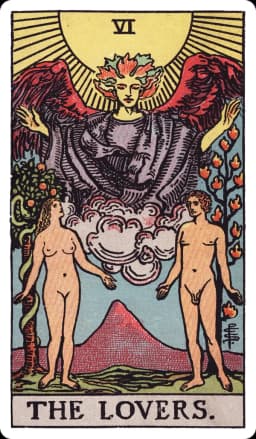
The Lovers (Major Arcana VI) is about a significant choice involving values and alignment, often at a larger, life-defining scale. The Two of Cups is a Minor Arcana card describing the specific, personal experience of mutual attraction or partnership in the moment — smaller in scope, more about the immediate relationship dynamic than a defining life choice.
Does the Two of Cups mean the relationship will last?
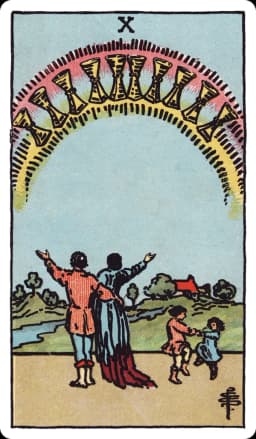
It confirms mutual, balanced connection in the present, not necessarily longevity. For a reading about a relationship's long-term future, cards further along the suit's numbered sequence — the Ten of Cups for lasting fulfillment, in particular — speak more directly to duration.
Related Cards
Spreads that read Two of Cups
- Relationship Spread (Two-Person) — 6 positions, intermediate
- Chakra Spread — 7 positions, intermediate
- Soulmate Spread — 5 positions, intermediate
Where Two of Cups sits in the deck
Card correspondences sourced from the Hermetic Order of the Golden Dawn tradition — see our methodology.