Major Arcana · Major Arcana
Judgement
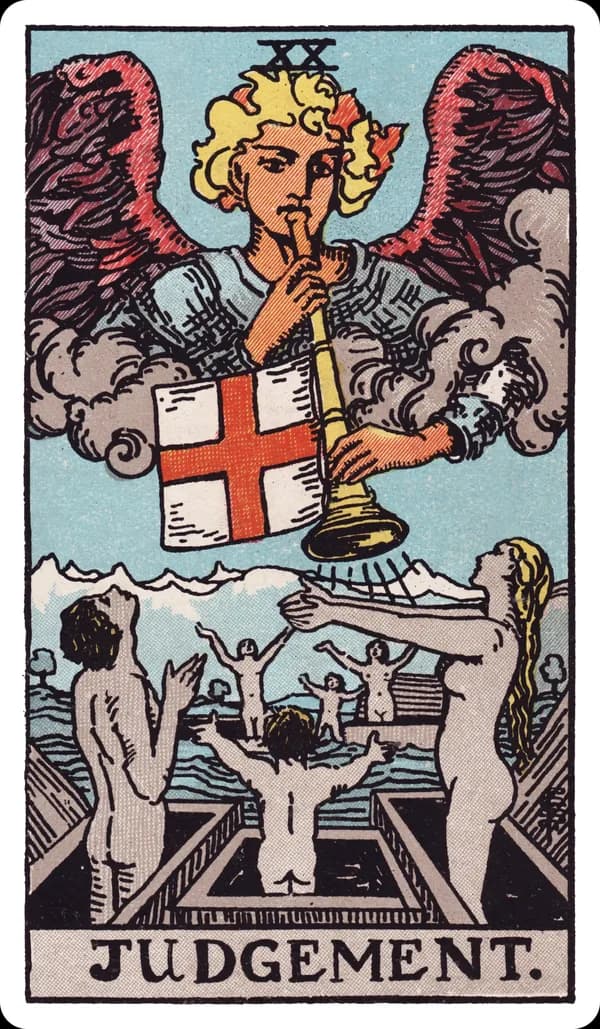
Judgement stages a scene of resurrection and reckoning: an angel blows a trumpet from the clouds, and below, human figures rise from open coffins, arms raised, faces turned upward toward the call. Numbered XX, this card represents a moment of genuine awakening — a summons to look honestly at your life, own your past choices fully, and answer a call toward something more authentic than what came before. Unlike the Judgement of popular imagination, this isn't about punishment or condemnation; the figures rising from their graves aren't shown in fear, but in a posture of welcome, arms open to receive the call rather than flinching from it. This is one of the Major Arcana's three elemental trumps, assigned Fire in Golden Dawn tradition, and that fire brings an active, transformative energy to what could otherwise be a purely reflective moment — Judgement doesn't just ask you to look back, it asks you to actually rise and respond.
- Element
- fire
- Ruling planet / sign
- Fire
Numerology: Twenty reduces to two (2+0) and reopens the High Priestess's duality at its most active, summoning register — no longer quiet, receptive stillness, but a direct call-and-response that demands an answer. Following the Sun's radiant clarity, twenty represents that clarity being put to a direct test: will you actually answer the call it's illuminated for you?
Upright Meaning
Upright, Judgement represents a genuine moment of awakening — an honest reckoning with your past choices, patterns, or identity, followed by a real, welcomed call to rise into something more authentic. This card often shows up when it's time for genuine self-evaluation: looking back honestly at where you've been, taking full accountability for both the good and the difficult parts of your history, and using that clear-eyed accounting as the foundation for a genuine next chapter rather than repeating an old pattern unconsciously. It carries a strong sense of being called toward something — a purpose, a realization, a summons you can't quite ignore even if you wanted to — and it favors answering that call directly rather than staying comfortable in an old, familiar identity that no longer fits who you're becoming. Unlike Death's clean ending or the Tower's sudden collapse, Judgement's reckoning tends to feel less destructive and more like a genuine invitation, even when it requires facing something uncomfortable about your past. In a reading, this card often suggests you're being asked to see yourself and your history clearly, take full ownership of it, and rise toward whatever new chapter that honest self-evaluation is now making possible.
Reversed Meaning
Reversed, Judgement's welcomed call to rise gets avoided or turned inward as harsh self-criticism. The most common reading is avoiding a reckoning: refusing to honestly evaluate your own past choices or current patterns, staying in the metaphorical coffin rather than rising to meet the call, often because genuine self-examination feels too uncomfortable to face directly. A second reading is self-doubt: hearing the call toward something more authentic but not trusting yourself enough to actually answer it, second-guessing a genuine calling or realization rather than acting on it. A third reading is harsh self-judgment: turning the honest self-evaluation this card represents into excessive, unforgiving self-criticism, holding yourself to an impossibly high standard rather than the clear-eyed, ultimately compassionate accounting the upright card actually favors. Reversed Judgement is a useful reminder that honest self-reckoning and harsh self-punishment aren't the same thing — the upright card's welcoming, open-armed posture is the model to return to, not the reversed card's avoidance or excessive self-blame.
Read the full reversed meaning →Symbolism
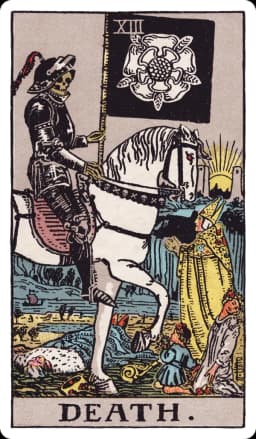
The angel blowing the trumpet is traditionally identified as Gabriel, the archangel associated in several religious traditions with important announcements and calls to awaken — the same figure said to have delivered pivotal news in both Christian and Islamic tradition, here delivering a summons rather than a specific message. The red cross on the trumpet's banner echoes similar cross imagery found in the Death card's flag, suggesting a thematic connection between the two: both represent significant transitions, though Death's is a clean ending while Judgement's is closer to a resurrection or rebirth following one. The open coffins the figures rise from represent old identities or past versions of the self being left behind, not literal death — this is a card about rising up out of something that had confined you, whether that's a limiting self-belief, an old pattern, or a chapter of life you'd outgrown. The figures' raised arms and upward-turned faces are essential to the card's meaning: they're shown receiving the call eagerly rather than resisting it, modeling the honest, welcoming self-evaluation this card ultimately asks for. The distant grey mountains on the horizon suggest that even after this moment of reckoning and rising, more journey and more growth still lie ahead.
Judgement from the Rider-Waite-Smith deck: a winged angel, usually identified as Gabriel, blows a trumpet from among the clouds, a banner bearing a red cross hanging from the instrument, while naked human figures below rise up from open coffins with arms outstretched in a mixture of awe and welcome, distant grey mountains visible on the horizon.
→ See what Fire means in your horoscope on GetMyHoro
→ Find your own life-path number on NumberAngel
In Love
Judgement upright often signals a genuine moment of honest evaluation about a relationship or your own romantic patterns — clearly seeing, and taking real accountability for, what has and hasn't worked in past relationships, and using that honest accounting to move toward something more authentic going forward. Single, this card can point toward a real awakening about what you actually want and need in a partner, released from old patterns or unconscious repetitions that weren't serving you, an honest, welcomed reckoning that clears space for a healthier next chapter. Partnered, it can describe a relationship reaching a point of genuine, honest self-evaluation — both people looking clearly at the relationship's real patterns and choosing, with open arms rather than defensiveness, to rise toward something more authentic together. Reversed, the caution splits: either avoiding an honest look at a relationship pattern that clearly needs addressing, second-guessing a genuine realization about what you actually need rather than trusting and acting on it, or being excessively harsh on yourself about past relationship mistakes rather than extending the same clear-eyed compassion this card's upright meaning actually favors.
Read the full love meaning →In Career
At work, Judgement favors honest professional self-evaluation — clearly assessing your career path, taking full accountability for both your genuine accomplishments and your real mistakes, and using that honest accounting as the foundation for a genuine next chapter rather than an unconscious repeat of an old pattern. This card often shows up around a significant professional calling or realization — recognizing what you actually want from your career, distinct from what you've simply been doing out of habit or inertia, and answering that realization with real action rather than staying comfortably stuck. It can also describe being professionally 'called' toward a specific path or purpose that feels significant rather than arbitrary. As coworker or manager energy, Judgement describes someone who evaluates performance (their own and others') honestly and fairly, favoring genuine accountability over either harsh criticism or avoidance of hard feedback. Reversed, the caution points toward avoiding a needed professional reckoning — refusing to honestly evaluate a pattern or mistake that clearly needs addressing, self-doubt that keeps you from answering a genuine career calling you already sense, or being excessively harsh on yourself about a professional setback rather than extending honest, clear-eyed compassion.
Read the full career meaning →Money & Health — Reflection Themes
Money: As a theme for financial reflection, Judgement upright favors honest financial self-evaluation — clearly assessing your actual financial history and patterns, taking full accountability for both good decisions and genuine mistakes, and using that honest accounting to build a more authentic financial approach going forward rather than repeating an old, unconscious pattern. This card can also point toward a significant financial realization or calling — recognizing clearly what your money is actually for, distinct from habits you've simply fallen into without examining them. Reversed, the caution points toward avoiding an honest financial reckoning — refusing to look clearly at a spending or debt pattern that genuinely needs addressing, or turning that honest evaluation into excessive self-blame rather than a clear-eyed, forward-looking accounting. It can also describe self-doubt about a genuine financial realization or decision you already sense is right but haven't trusted yourself enough to act on.
Health: This card favors honest self-evaluation about your physical and mental wellbeing — clearly assessing patterns and habits, taking full, compassionate accountability for what has and hasn't served you, and using that honest accounting to answer a genuine call toward a healthier next chapter. It can point toward a significant realization or awakening about your own health — finally seeing a pattern clearly that you'd been avoiding examining too closely, and responding to that clarity with real action rather than continued avoidance. Reversed, it can flag avoiding an honest health reckoning — refusing to look clearly at a habit or pattern that needs addressing, or, in the opposite direction, being excessively harsh and self-punishing about a health situation rather than extending clear-eyed, compassionate accountability.
Spiritual Meaning
A trumpet sounds from among the clouds in this card's imagery, and below, figures rise from open coffins with arms raised toward the call rather than flinching from it — spiritually, this represents a genuine awakening, a moment of honest self-reckoning that, unlike its ominous popular-culture connotation, is fundamentally about welcome and rising rather than condemnation. Those figures model a spiritual practice built on honest, compassionate self-evaluation rather than harsh judgment — seeing your full history clearly, taking real accountability for it, and choosing to rise toward something more authentic rather than staying confined by an old, outgrown identity. This card is one of the Major Arcana's three elemental trumps, assigned Fire in Golden Dawn tradition, and that fire lends an active, transformative charge to what might otherwise be purely reflective. As the twentieth numbered trump, following the Sun's radiant clarity, it represents the direct test of whether that clarity will actually be acted on — a genuine turning point just before the sequence's final card.
Yes or No?
For yes/no questions, Judgement leans toward 'yes' — specifically a yes tied to honest self-evaluation and answering a genuine calling. If your question concerns whether to pursue a realization or path you already sense is right, this card affirms it, particularly if you're being honest with yourself rather than avoiding an uncomfortable truth about your own situation. A significant life realization, a career or personal calling, or an honest reckoning with your past leading somewhere genuinely better are the strongest fits for this card's yes. Reversed, the answer softens into caution: either you're avoiding an honest self-evaluation the situation actually calls for, or self-doubt is keeping you from trusting and acting on a realization you already sense is genuine. What matters most in that reversed case is looking clearly and compassionately at whatever you've been avoiding, since this card's whole nature suggests that the call, once honestly faced, tends to lead somewhere worth rising toward rather than something to keep dreading.
Read the full yes-or-no breakdown →Frequently Asked Questions
Does Judgement mean I'm being punished?
No — despite the intimidating name, this card is fundamentally about awakening and welcome rather than condemnation. The figures in the artwork rise toward the trumpet's call with open arms, not fear, and the card's core meaning is about honest, compassionate self-evaluation rather than punishment.
What's the difference between Judgement and Justice?
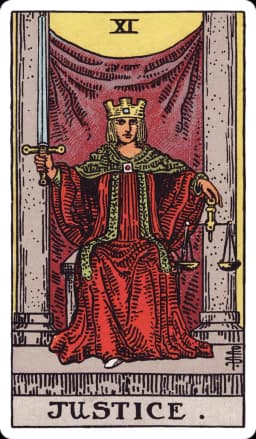
Justice (card XI) is about fair, honest weighing of cause and effect — external accountability and consequence. Judgement (card XX) is about internal awakening and self-evaluation — a personal reckoning and calling toward a more authentic next chapter, rather than a judgment imposed from outside.
Who is the angel in the Judgement card?
Most readers identify the figure as Gabriel, drawing on the same messenger role Gabriel plays in Christian and Islamic tradition. What's distinctive in this card's version is that Gabriel carries no scroll or written text, only the trumpet itself, since the point being made is a summons to rise and respond, not information to be read or interpreted.
Is Judgement a good card to receive?
Generally, yes — it's most often read as a positive, if significant, card representing genuine awakening and a welcomed call toward authenticity. Reversed, it becomes more cautionary, but even then it's usually pointing to avoidance or self-doubt rather than a truly negative outcome.
Related Cards

Where Judgement sits in the deck
Card correspondences sourced from the Hermetic Order of the Golden Dawn tradition — see our methodology.