Minor Arcana · Pentacles
Two of Pentacles
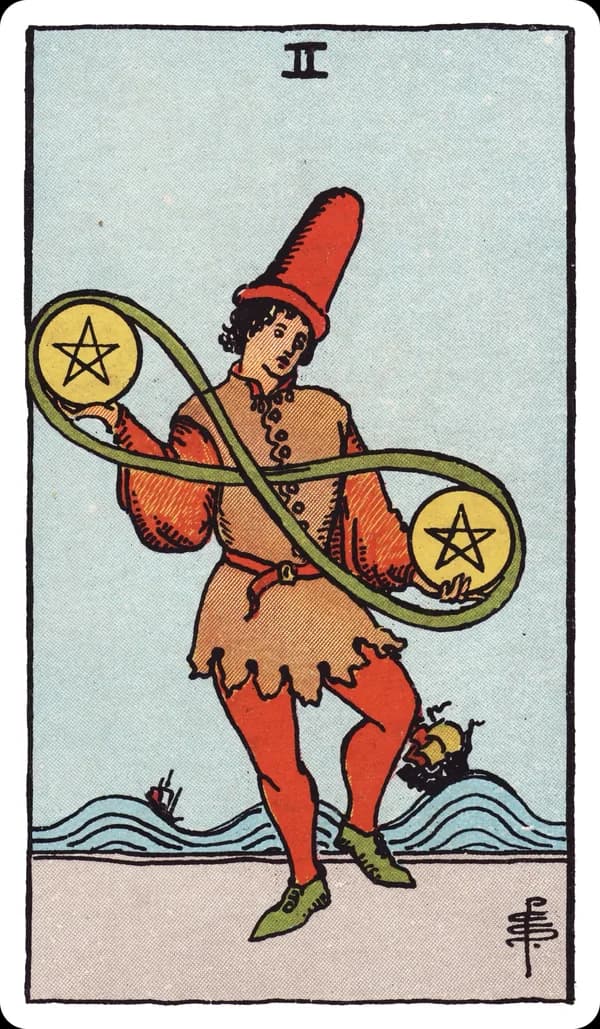
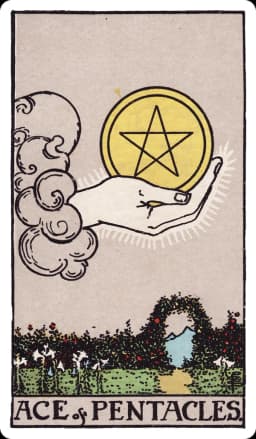
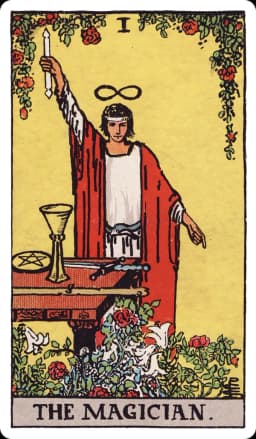
A young man in a jester's cap balances on one foot, mid-dance, juggling two gold pentacles connected by a long green ribbon looped into a lemniscate — the infinity symbol also seen crowning the Magician and Strength. Behind him, two ships pitch on tall, choppy waves, visibly at the mercy of conditions he isn't controlling. Where the Ace of Pentacles showed a single coin held steady in an open hand above cultivated ground, the Two puts that same earth energy into motion for the first time, and motion turns out to be harder to manage gracefully than stillness. The jester's cap is a deliberate choice: this is a card about skillful, light-footed juggling rather than grim struggle, and the figure's expression in most printings reads as amused concentration rather than panic, even with a lot visibly in the air at once.
- Element
- earth
- Ruling planet / sign
- Jupiter in Capricorn
- Suit
- pentacles
Numerology: The Golden Dawn ties this card to Jupiter's expansive optimism landing in disciplined Capricorn — growth trying to fit inside a schedule. As the suit's second card, it takes the Ace's single, still coin and sets it moving, which is exactly why juggling rather than resting is this pair's defining image.
Upright Meaning
Upright, the Two of Pentacles describes juggling multiple demands — two jobs, several projects, competing financial priorities, a full calendar — with enough skill and adaptability that nothing actually gets dropped, even if it doesn't feel effortless from the inside. It's a card of active, ongoing balance rather than a finished, settled state: the coins stay in motion the whole time, which is exactly why the dancer's loose, rhythmic stance matters more here than firm, static control would. This card often shows up when someone is managing real complexity reasonably well and could use permission to see that as a genuine skill rather than a sign that life has simply gotten too hectic. It also carries a note about flexibility as a strategy: rigid plans tend to snap under the kind of unpredictable pressure the background ships are riding out, where a willingness to adjust priorities as circumstances shift tends to hold up better. The card doesn't promise the juggling ends soon — it promises that, for now, you're managing it with more grace than you're probably giving yourself credit for.
Reversed Meaning
Reversed, the Two of Pentacles describes the juggling act breaking down — too many priorities competing for the same limited time and energy until something genuinely gets dropped. This can look like overcommitting to more than is realistically manageable, disorganization that makes even a workable list of priorities feel chaotic, or the specific exhaustion of trying to keep several plates spinning without ever getting to set any of them down. It frequently shows up when a schedule or budget that used to work has quietly stopped working, and the gap between what's being attempted and what's actually sustainable has widened without much notice. Unlike a card describing outright hardship, the reversed Two of Pentacles is less about the underlying resources being insufficient and more about the coordination itself failing — the two pentacles are still there, they're just no longer being kept in a workable rhythm. Triage tends to help more than sheer additional effort here: naming honestly which priorities can actually be juggled together right now, and which ones need to be set down, even temporarily, so the rest don't get dropped too.
Read the full reversed meaning →Symbolism
Look first at the lemniscate-shaped ribbon linking the two pentacles — an infinity symbol that implies the balancing act shown here isn't a one-time event but an ongoing, cyclical condition, the same way the Magician's identical loop above his head signals that mastery is a continuous practice rather than a fixed achievement. The figure's dancer's pose — weight shifted onto one leg, body in motion rather than braced and rigid — argues that successful juggling looks more like rhythm than rigid control; standing stiffly with both feet planted would make the coins far harder to keep moving smoothly than staying loose does. The choppy sea and pitching ships in the background represent the genuinely unpredictable forces (the economy, other people's schedules, plain bad luck) that this figure is dancing in front of rather than commanding — he can't calm the water, only keep his own footing steady on the shore in front of it. The jester's cap ties this card to the deck's other trickster-adjacent figures, suggesting that a light touch and a sense of humor about the difficulty are themselves part of the skill, not a failure to take the situation seriously enough.
The Two of Pentacles from the Rider-Waite-Smith deck: a young figure in a jester-like cap dances on a shoreline, juggling two pentacles joined by a green ribbon looped into a lemniscate, while two ships ride large swelling waves in the background.
→ See what Jupiter in Capricorn means in your horoscope on GetMyHoro
→ Find your own life-path number on NumberAngel
In Love
In a relationship reading, the Two of Pentacles usually describes balancing a partnership against other real demands — work, family, finances, personal projects — rather than describing the relationship's emotional core directly. A partnered relationship, in this reading, often has to be actively fit into a full life rather than assumed to take care of itself, which isn't necessarily a bad sign; it can simply mean both people are managing genuinely full lives and choosing to keep making room for each other inside them. For someone single, it can describe juggling the early stages of dating alongside other commitments, or weighing more than one romantic possibility at once without having settled on where to focus. The card's dancer's-grace quality matters here: this is a relationship that can absolutely work while busy, as long as both people stay adaptable rather than resentful about the juggling itself. Reversed, the love reading shifts toward a relationship that's being squeezed out by everything else competing for attention — a partner who consistently comes last on the list of priorities, or a couple that's stopped adjusting to each other's changing schedules and needs, letting the relationship become one of the dropped balls. It's rarely a card about love disappearing outright; it's more often a card about love not currently getting the coordinated attention it needs to stay in rhythm with everything else.
Read the full love meaning →In Career
At work, the Two of Pentacles is one of the deck's clearest cards for managing multiple roles, projects, or income streams at once — a second job alongside a main career, several overlapping deadlines, or the early, scrappy stage of a business where one person is handling far more functions than would be sustainable long-term. It favors adaptability and creative time-management over rigid scheduling, since the card's whole visual argument is that graceful motion holds up better under pressure than a fixed, unbending plan. It can also describe a genuinely useful stretch of professional versatility — picking up new skills out of necessity because the workload demands it, which builds real capability even though it doesn't always feel like growth in the moment. Reversed, the career reading turns toward overcommitment catching up with you: deadlines missed because there were simply too many of them, quality slipping because attention is spread too thin, or the specific burnout that comes from juggling well for a long stretch without ever getting to put anything down. It can also describe disorganization at a structural level — unclear priorities at work making an already full plate feel unmanageable rather than merely full. The corrective here is rarely 'do more' — it's an honest look at which commitments can genuinely coexist and which ones need to be renegotiated or dropped before something important breaks.
Read the full career meaning →Money & Health — Reflection Themes
Money: Managing more than one financial obligation at once shows up plainly here — a budget stretched across rent, debt repayment, and savings goals all pulling at the same limited income, or the specific skill of keeping several bills current without letting any one of them slip. The upright card favors a genuinely useful financial skill: adapting a budget as circumstances shift rather than sticking rigidly to a plan that no longer fits the current month, the same flexible footing the dancer uses to keep both coins moving. It can also describe deliberately balancing two income sources — a side income alongside a main job, for instance — as a strategy rather than a sign of instability. Reversed, the same juggling act starts to fail: bills paid late because there were too many competing at once, a budget that's become disorganized enough that it's hard to even see the full picture clearly, or financial overextension from taking on more obligations (a loan, a subscription, a shared expense) than the current income can comfortably absorb. If this card comes up reversed, name the specific obligation closest to actually slipping, and ask what setting it down deliberately — before it's dropped by accident — would look like.
Health: As a theme for reflection, the upright Two of Pentacles often describes managing wellbeing alongside a genuinely full schedule — fitting in movement, meals, and rest around work and other obligations rather than treating health as something that only happens once everything else is handled. It favors flexibility: adapting a routine to whatever the day actually allows rather than abandoning it entirely when the ideal version isn't possible, which tends to hold up better over time than an all-or-nothing approach. Reversed, this same card can flag the point where juggling stops working — sleep, meals, or basic self-care becoming the things that get dropped first when everything else competes for attention, or the specific fatigue of trying to keep too many wellness commitments going at once without any of them actually sticking. It has no fixed link to a specific condition; its use here is as a prompt to notice honestly whether your current routine is being kept in a workable, adaptable rhythm, or whether something needs to be set down before it gets dropped under pressure.
Spiritual Meaning
A spiritual practice has to survive contact with an actual busy life, and this card is the tarot's clearest image of what that looks like when it's working: not withdrawal from the world's demands, but a light-footed, ongoing dance with them. The lemniscate ribbon linking the two coins suggests balance isn't a destination reached once and kept forever — it's closer to a continuous practice, requiring the same small adjustments a dancer makes constantly and almost invisibly to stay upright. Drawing this card can point toward finding a spiritual or reflective practice that flexes with a full life instead of demanding a stillness your current circumstances don't actually allow — five minutes of genuine presence fit into a busy day rather than an hour of meditation you'll never consistently find time for. It also carries a gentler message about self-judgment: the jester's cap and dancer's ease suggest that struggling visibly with life's demands doesn't have to mean failing at them, and that finding real, sustainable rhythm inside genuine complexity is its own kind of accomplishment, not a lesser version of calm.
Yes or No?
For yes/no questions, the Two of Pentacles is one of the deck's genuine 'maybe' cards, and that ambiguity is built into its imagery rather than a cop-out: it describes an ongoing balancing act, not a fixed outcome, so a question looking for a clean yes or no often needs reframing first. If your question is close to 'can I manage both of these things,' the upright card leans encouraging — yes, with continued adaptability and attention. If the question is closer to 'will this specific plan work exactly as it currently stands,' the honest answer is that it depends on how well the juggling continues, which the card can't guarantee in advance. Reversed, the leaning shifts more clearly toward caution: the current balance isn't holding, and something will need to be renegotiated or dropped before the underlying question can really be answered either way. When this card appears for a yes/no question, it's often more useful to ask what would need to change for a clearer answer to emerge than to treat the card's built-in ambiguity as an unsatisfying non-answer.
Read the full yes-or-no breakdown →Frequently Asked Questions
Why does the Two of Pentacles show someone dancing instead of struggling?
The dancer's pose is a deliberate contrast to a more strained, effortful image of juggling. It suggests that managing multiple demands well looks less like gritted-teeth control and more like rhythm and flexibility — a light touch that adapts to shifting pressure rather than trying to hold everything perfectly rigid.
What do the two ships in the background mean?
The ships riding rough waves represent outside forces — market conditions, other people's schedules, plain unpredictability — that are genuinely beyond the dancing figure's control. They're a visual reminder that this card's balancing act is happening in front of real turbulence, not in a calm, controlled environment.
If I'm thinking about taking on a second job or a side project, is the Two of Pentacles encouraging?
It's a fitting card for exactly that situation, particularly if the second commitment is being managed with real adaptability rather than rigid over-scheduling. It doesn't guarantee the arrangement is easy, but it does favor the flexible, both-can-work approach over an either/or choice.
Does the infinity symbol on the ribbon mean this situation will never end?
It's less a prediction about duration and more a statement about the nature of balance itself — an ongoing practice rather than a one-time achievement. It can describe a genuinely long stretch of juggling, but its main point is that adaptability is a continuous skill, not that the current situation is permanent.
Related Cards
Spreads that read Two of Pentacles
- Money & Abundance Spread — 5 positions, intermediate
Where Two of Pentacles sits in the deck
Card correspondences sourced from the Hermetic Order of the Golden Dawn tradition — see our methodology.