Cups
The suit of Cups governs the water element — emotion, intuition, relationships, and the inner life. Its 14 cards (Ace through Ten, then Page, Knight, Queen, and King) trace water's Golden Dawn decan attributions through Cancer, Scorpio, and Pisces, tarot's three water zodiac signs. Where Wands asks what you're building and Pentacles asks what you're securing, Cups asks what you're feeling — and, more specifically, whether you're letting yourself feel it honestly.
→ Explore cups symbolism further on SymbolHubs
Element and Core Theme
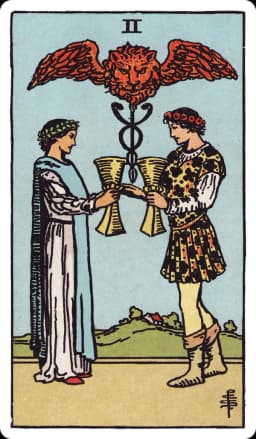
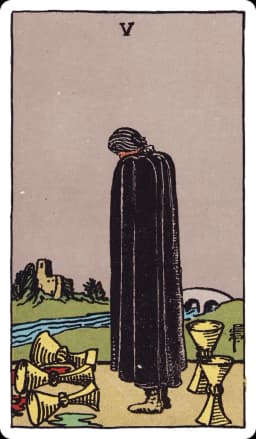
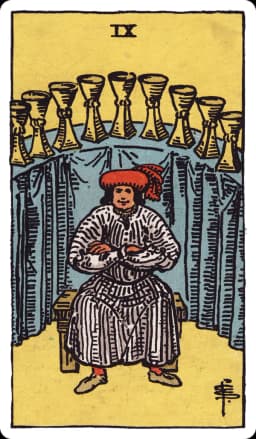
Water in tarot, as in most symbolic systems, represents what moves rather than what holds still — feeling, intuition, connection, the parts of experience that resist being fully measured or scheduled. Cups cards rarely describe a plan or a deadline; they describe a state, an emotional weather pattern someone is currently moving through, whether that's the Two of Cups' mutual recognition, the Five of Cups' grief, or the Nine of Cups' quiet contentment. That makes the suit unusually honest as a diagnostic tool: because feelings are harder to fake or force than actions, a Cups-heavy reading tends to surface what's actually going on emotionally beneath whatever story is being told about a situation on the surface. The suit's ruling planet across its three water-sign decans is Venus in Scorpio (Seven), Mars in Scorpio and Cancer for a couple of the number cards, and the Moon repeats across several — reinforcing water's core association with the Moon and its long-standing tarot link to intuition, cycles, and the parts of a person that don't respond well to being rushed. It's worth noting Cups doesn't only mean pleasant feeling — grief, jealousy, and disillusionment are as much this suit's territory as love and joy are, since the suit's actual subject is the emotional life in full, not simply its more comfortable half. The suit's three water decans also carry noticeably different emotional flavors worth telling apart: the Cancer-ruled cards (Two, Three) lean toward home, family, and early bonding; the Scorpio-ruled cards (Five, Six, Seven) lean toward intensity, memory, and psychological depth; and the Pisces-ruled cards (Eight, Nine, Ten) lean toward dissolution, personal fulfillment, and finally shared transcendence — a genuine emotional progression hiding inside what looks, on the surface, like a simple numbered sequence.
How the Group Is Structured
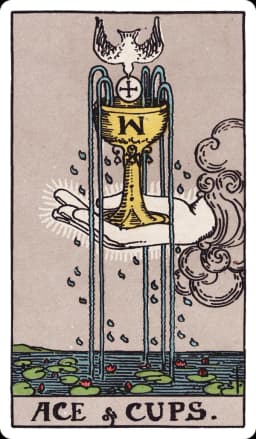
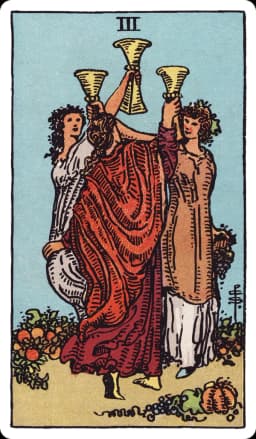
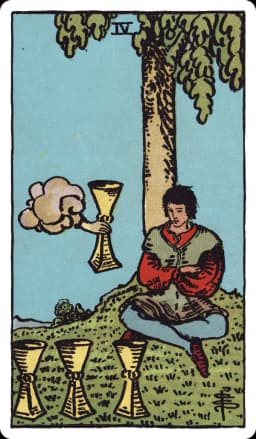
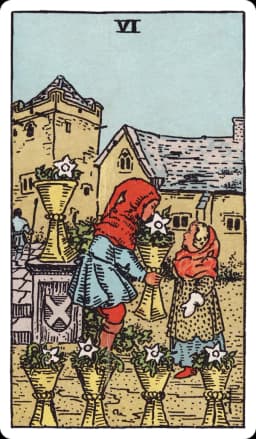
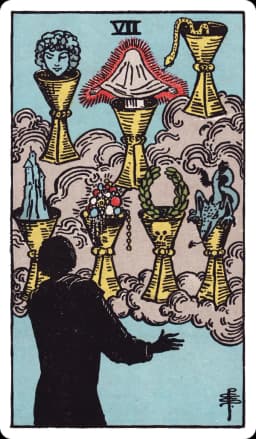
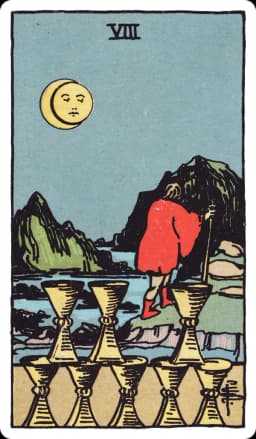
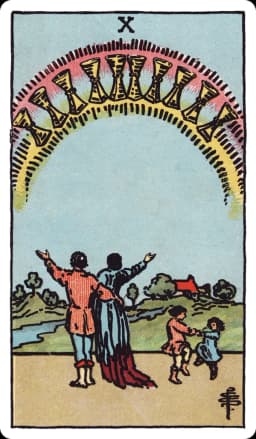
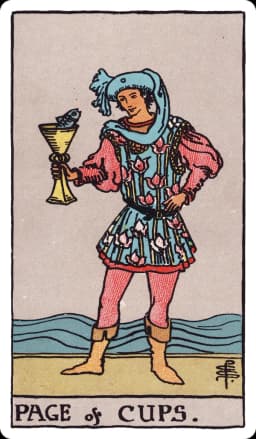
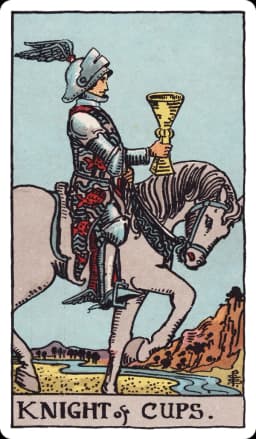
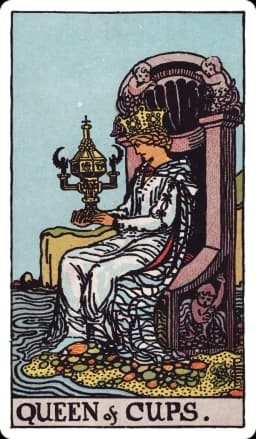
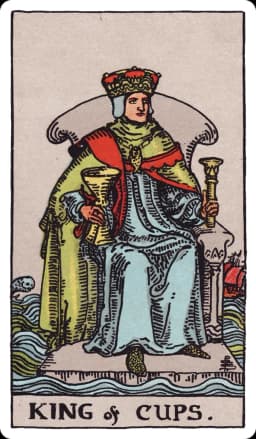
The suit's numbered arc traces a recognizably emotional trajectory rather than a purely linear buildup. The Ace opens with a single, overflowing gift — new feeling arriving from outside the self. Two and Three widen that feeling outward into connection and shared community. Four introduces the suit's first real complication: contentment curdling into apathy, taking a good thing for granted. Five and Six sit with loss and nostalgia respectively, grief and memory as necessary emotional terrain rather than problems to rush past. Seven presents choice without clarity — an abundance of options, some illusory. Eight marks a deliberate departure, walking away from something outwardly fine but no longer emotionally sufficient. Nine offers personal, self-contained satisfaction, and Ten widens that same satisfaction into shared, generational family joy — the suit's fullest expression of emotional fulfillment. The four court cards then step outside the numbered arc to describe different emotional temperaments and levels of emotional maturity: the Page as an emotionally curious beginner, the Knight as an idealistic pursuer sometimes prone to over-romanticizing, the Queen as someone who has learned to hold deep feeling with real steadiness, and the King as someone who has learned to lead with emotional intelligence rather than being ruled by feeling. By the time this arc reaches Ten, it has passed through connection, complication, loss, choice, and departure on the way to personal then shared contentment — a shape that mirrors how a genuine emotional life actually tends to unfold, rarely in a straight line.
Reading These Cards Together
Multiple Cups cards clustered in one spread are usually the clearest single signal that a question, however it was phrased, is really about feeling rather than logistics — worth checking whether the actual concern underneath a career or money question, for instance, is really an emotional one about satisfaction, belonging, or fear. When several Cups numbers appear together, look at where they sit on the suit's emotional arc: a Five and an Eight together describe loss and departure reinforcing each other, likely a genuine ending being processed in full, where a Two and a Nine together suggest connection and personal contentment mutually reinforcing a generally positive emotional state. A Cups court card alongside a Cups number card is often worth reading as that emotional temperament actively navigating the specific situation the number card describes — a Cups Queen beside the Five of Cups, for example, can describe someone with real emotional steadiness currently sitting with genuine grief rather than being destabilized by it. It's also worth checking a Cups-heavy spread against whichever other suits appear alongside it: Cups paired with Pentacles often signals emotion and practicality needing to be reconciled rather than treated as opposed, while Cups paired with Swords can point to feeling and clear thinking pulling in different directions on the same question.
Cards in this group
Notable Cards Worth a Closer Look
A handful of Cups cards carry outsized weight in readings, either because they mark the suit's clearest emotional turning points or because they're frequently confused with a neighboring card that means something meaningfully different.
- Ace of Cups — the suit's opening gift, and the card every other Cups card's emotional arc can be read as building from.
- Five of Cups — the suit's grief card, and one worth reading carefully rather than as simple bad news — it depicts loss alongside what's still standing.
- The Star — technically a Major Arcana card rather than a Cups card, but its water-drenched hope makes it worth knowing as this suit's closest Major-Arcana cousin in tone.
- Ten of Cups — the suit's closing card, widening the Nine's private, personal satisfaction into fulfillment shared with an entire family — the rainbow overhead is one of the deck's clearest single images of lasting, earned harmony.
Common Questions
Is Cups always a 'positive' suit to draw?
No — grief, jealousy, and disillusionment are as native to this suit as love and contentment. Cups describes the full emotional range honestly rather than only its pleasant half, which is part of what makes it a useful diagnostic suit.
What does it mean if my reading is almost entirely Cups cards?
It usually means the underlying question is fundamentally an emotional one, even if it was asked about career, money, or a decision on the surface. Worth checking honestly what feeling is actually driving the question before treating the reading's specific advice as final.
How is the Cups court different from the other three suits' courts?
Cups court cards tend to describe emotional depth and intuition rather than the more outward-facing qualities (ambition, structure, resourcefulness) the other suits' courts often emphasize. A Cups King, for instance, leads through emotional steadiness rather than the Wands King's drive or the Pentacles King's material command.
Is there a good starting point for learning the Cups suit?
Begin with the Ace and the Ten as a pair — they bookend the suit's arc, the Ace as feeling's first, singular arrival, the Ten as that same feeling widened into lasting, shared fulfillment.
Does a reversed Cups card always mean something has gone wrong?
Not automatically. Several Cups reversals describe genuine relief rather than a worse outcome — the reversed Four's renewed engagement, the reversed Seven's hard-won clarity, the reversed Eight's decisive rather than avoidant departure. Because this suit is fundamentally about emotional movement, reversed more often marks a shift in direction, feeling returning after apathy, clarity replacing illusion, than a simple downgrade from the upright meaning. It's worth checking the specific card and its surrounding context before assuming a reversed Cup automatically signals trouble; several of the suit's most encouraging draws only show up reversed.