Minor Arcana · Cups
Eight of Cups
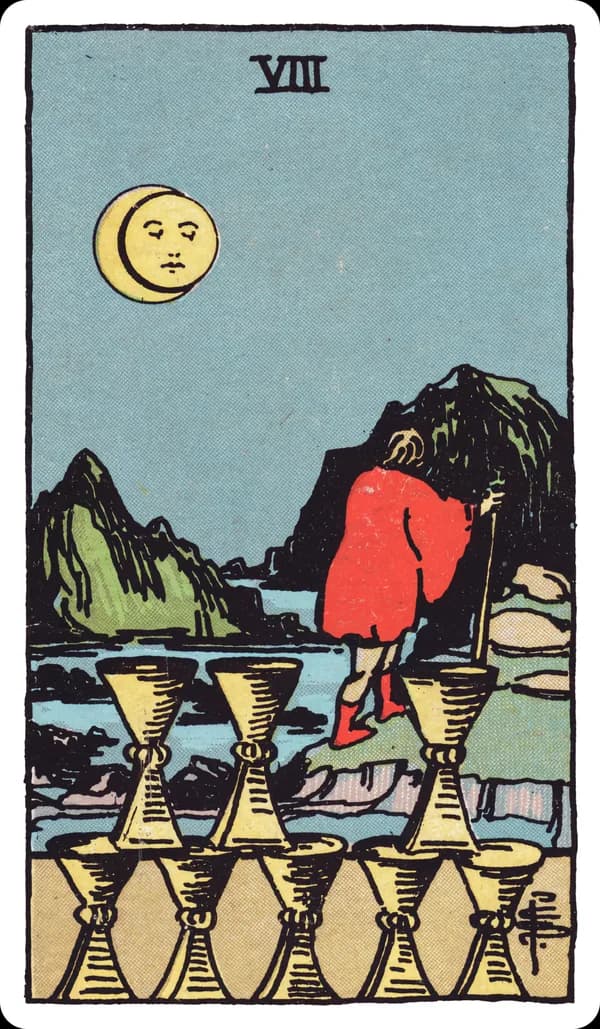
A lone, cloaked figure walks away from the viewer, staff in hand, moving toward a gap between distant mountains under a night sky where the moon appears partially eclipsed. Behind him, arranged with obvious care, are eight cups stacked in two rows — except the arrangement isn't quite complete: a gap sits where a ninth cup's position would logically continue the pattern, suggesting he's leaving something that was almost, but not entirely, finished. His red cloak and staff, along with his deliberate, forward-leaning gait, make clear this isn't a wandering or aimless departure; he knows exactly where he's headed, even if the viewer doesn't. Unlike the Five of Cups' figure, who stands frozen in grief over what's fallen, the Eight of Cups' figure is already in motion, and the cups he leaves behind stand upright and intact rather than spilled — whatever he's walking away from wasn't a failure, it simply stopped being enough.
- Element
- water
- Ruling planet / sign
- Saturn in Pisces
- Suit
- cups
Numerology: Eight, in the Cups suit, marks a deliberate departure rather than external collapse — the will to leave what's no longer enough, even without a clear destination yet in sight. The Golden Dawn's title, "Lord of Abandoned Success," captures this precisely: Saturn's discipline meeting Pisces' longing for something beyond the material, describing someone leaving genuine, hard-won success behind because it no longer satisfies a deeper need.
Upright Meaning
Upright, the Eight of Cups describes a deliberate walking-away — leaving a situation that looks successful from the outside, but no longer satisfies something deeper, in search of more meaning rather than more comfort. It's a card of quiet courage: choosing to abandon something genuinely built, rather than easy or failing, because staying would mean settling for less than what you actually need. This distinguishes it clearly from other departure-adjacent cards in the deck — the Eight of Cups isn't fleeing crisis, it's outgrowing adequacy. It frequently shows up when someone senses that a relationship, job, or way of life has stopped growing with them, even though nothing specific has gone wrong. The card doesn't specify the destination; like the distant mountains in its own artwork, what comes next is genuinely unclear, and part of the card's message is that some searches have to begin before the destination is fully known. In a reading about a decision, the Eight of Cups often confirms that the pull to leave is legitimate, even if it can't yet be fully explained or justified to others.
Reversed Meaning
Reversed, the Eight of Cups usually describes staying in a situation well past the point where it stopped being enough — fear of the unknown outweighing the discomfort of stagnation, or a departure that's been considered for a long time without ever actually happening. It can point to avoidance specifically: recognizing that something needs to change, but continuing to make excuses, tell yourself it isn't that bad, or wait for a clearer sign before acting. A second reversed reading describes the opposite pattern: leaving too hastily, walking away from something genuinely worth staying for out of restlessness rather than real necessity, mistaking ordinary difficulty for a sign to abandon ship. A third reading describes the process of returning after having left — reconsidering a departure, or coming back to reclaim something that was set aside too quickly. How long the underlying dissatisfaction has actually been present, and whether nearby cards suggest stuck avoidance or impulsive flight, usually settles which reading fits.
Read the full reversed meaning →Symbolism
The eight stacked cups, carefully arranged rather than scattered, are the card's clearest signal that what's being left behind was genuinely built, not lost or ruined — this distinguishes the Eight of Cups sharply from the Five, where the cups are knocked over and spilled. Whatever the eight cups represent, a relationship, an achievement, a stable life, was real and, by most external measures, successful; the figure's choice to leave it anyway is what gives the card its particular emotional weight. The partially eclipsed moon overhead carries its own symbolic history: eclipses across many traditions mark liminal, in-between periods, a time when familiar light is temporarily obscured, fitting for a card about a transition made without full visibility into what comes next. The mountains the figure walks toward are distant and largely unknown, a visual echo of the Fool's mountains in the background of card 0, except here the traveler is older, more burdened by his staff, and moving with clear intention rather than an innocent's spontaneous leap. The red of his cloak, a color used sparingly but meaningfully across the deck, often signals strong will or passion — suggesting this departure, however solemn, is driven by real conviction rather than simple exhaustion or despair.
The Eight of Cups from the Rider-Waite-Smith deck: a cloaked figure walks away at night, leaning on a staff, leaving behind eight cups stacked in a careful arrangement with one visibly missing from the top row, beneath a partially eclipsed moon and distant mountains.
→ See what Saturn in Pisces means in your horoscope on GetMyHoro
→ Find your own life-path number on NumberAngel
In Love
In a love reading, the Eight of Cups often describes deliberately walking away from a relationship that looks fine on the surface but no longer feels emotionally sustaining — not because of a dramatic betrayal, but because something essential has quietly stopped being met. For someone single, it can describe leaving behind a pattern of relationships that were comfortable but ultimately unfulfilling, in search of a connection with more genuine depth. For someone partnered, it can point to a real, difficult decision being weighed: staying in a relationship that's stable and outwardly successful but privately unsatisfying, versus honoring a growing sense that it's no longer enough. Reversed, the love reading shifts toward staying too long — remaining in a relationship well past the point where it stopped serving you, out of fear of being alone or fear of the unknown rather than genuine hope things will improve. It can also describe the opposite pattern: leaving a fundamentally good relationship too impulsively, mistaking a difficult but normal patch for a deeper sign to abandon it entirely.
Read the full love meaning →In Career
At work, the Eight of Cups often describes leaving a job, career path, or business that's genuinely successful by external measures but no longer feels meaningful — walking away from status, security, or a title people would envy because something deeper isn't being fulfilled. It's a card that takes career dissatisfaction seriously even when there's no obvious external problem to point to; sometimes the honest answer really is that a role has simply been outgrown. It can also describe searching for more purposeful work after a stretch spent optimizing purely for stability or income. Reversed, the career reading points to staying in a role well past its usefulness — tolerating ongoing dissatisfaction out of fear of starting over, or continually postponing a career change that's been quietly necessary for a long time. It can also describe leaving a genuinely good position too abruptly, driven by restlessness rather than a real, considered reason. Distinguishing honestly between a role that's actually wrong for you and a normal, temporary rough patch in an otherwise sound path is the real work this card is asking of you.
Read the full career meaning →Money & Health — Reflection Themes
Money: Walking away from a financially successful but personally unsatisfying path is where this card's financial reflection tends to point — choosing meaning over income, or deliberately scaling back a lucrative but draining commitment in favor of something that feels more aligned with your actual values. It can describe the discomfort of giving up financial security in pursuit of something less certain but more fulfilling, a genuinely difficult tradeoff worth weighing honestly rather than romanticizing. Staying tied to a comfortable but unsatisfying financial arrangement purely out of fear of instability is one reversed pattern worth naming here, alongside its opposite: abandoning a sound plan too abruptly out of restlessness rather than any well-considered reason. It's worth checking honestly whether a financial decision under this card's influence is being driven by genuine values or by either fear of change or a craving for novelty.
Health: Walking away from a wellness routine, treatment approach, or health-related commitment that's technically working but no longer feels sustainable or meaningful is where this card's health theme tends to point, offered here as reflection rather than anything clinical, in search of something that better fits your actual needs. It can also describe the emotional work of leaving behind an old identity tied to illness or struggle, once genuine healing has made that identity no longer necessary. Reversed, the card can flag staying with an approach to your health that's stopped serving you, out of fear of trying something unfamiliar, or abandoning a genuinely helpful routine too impulsively out of restlessness. What matters more than any specific condition is honestly assessing whether your current approach to wellbeing still actually fits who you are now, rather than who you were when you first adopted it.
Spiritual Meaning
Spiritually, the Eight of Cups represents the necessary courage to leave behind even genuine success in pursuit of deeper meaning — a recognizably universal stage in many spiritual and mythic traditions, where the seeker walks away from an adequate, comfortable life to pursue something less certain but more true. The card resists the assumption that external achievement automatically equals fulfillment; its whole message depends on the eight cups genuinely being worth something, and the figure choosing to leave them anyway. It can mark a genuine spiritual calling — a pull toward something you can't yet fully explain, arriving alongside real reluctance to give up what you've already built. A felt sense of 'this isn't enough anymore,' even with no clear evidence of what's actually wrong, deserves to be taken seriously rather than dismissed as ingratitude — that's usually what this card is confirming when it shows up in a personal-growth reading.
Yes or No?
For yes/no questions, the Eight of Cups upright leans toward a 'no' — specifically, a no aimed at whatever is currently being outgrown or found insufficient, since this card's core message is that something already built has stopped being enough. If your question concerns whether to continue with a specific situation, plan, or relationship, this card is often confirming an instinct to leave rather than encouraging you to stay. It's a less useful card for predicting a specific outcome and more useful for confirming that a departure, even from something outwardly successful, is legitimate. Reversed, the reading shifts toward 'not yet, or not this way' — pointing either to staying too long out of fear when leaving would genuinely be right, or leaving too abruptly when the situation actually deserved more patience. In either reversed case, the card suggests the real answer depends on distinguishing genuine outgrowing from either avoidance or restlessness, which is worth doing honestly before acting on the reading.
Read the full yes-or-no breakdown →Frequently Asked Questions
Does the Eight of Cups mean I should quit something?
It often confirms that an instinct to leave a genuinely adequate but unsatisfying situation is legitimate, rather than telling you specifically what to quit. It's worth checking whether the dissatisfaction it describes is about the situation itself or about needing something deeper that the current situation genuinely can't provide.
Why does the figure leave eight upright cups instead of spilled ones?
The intact, carefully arranged cups signal that what's being left behind wasn't a failure — it was genuinely built and, by external measures, successful. That distinction is central to the card: it's about outgrowing something adequate, not escaping something broken, unlike the Five of Cups' spilled, ruined cups.
What does the eclipsed moon in the Eight of Cups mean?
It marks a liminal, in-between period — familiar light temporarily obscured, fitting a card about a transition undertaken without full visibility into what comes next. It reinforces that the figure is walking into genuine uncertainty rather than toward a clearly mapped destination.
How is the Eight of Cups different from the Ten of Swords?
The Ten of Swords describes a painful ending that happens to you, often abrupt and outside your control. The Eight of Cups describes a departure you choose deliberately, from something that isn't failing, in pursuit of something you sense is missing.
Related Cards
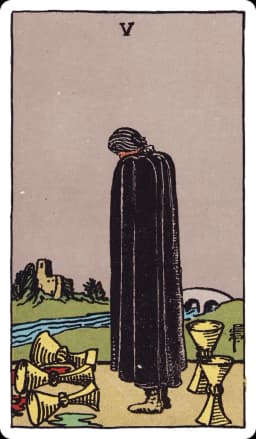
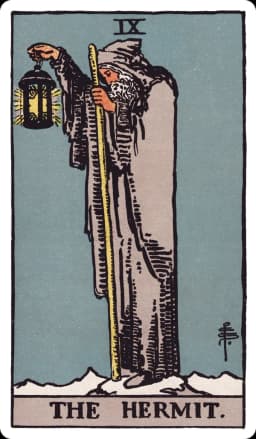
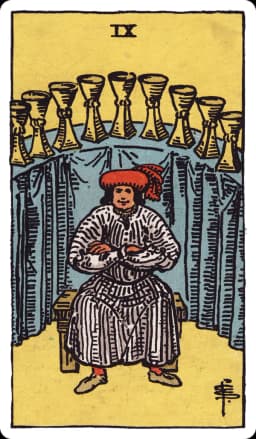
Spreads that read Eight of Cups
- Star Spread — 7 positions, intermediate
- Pros and Cons Spread — 5 positions, beginner
Where Eight of Cups sits in the deck
Card correspondences sourced from the Hermetic Order of the Golden Dawn tradition — see our methodology.