Pentacles
The suit of Pentacles (also called Coins or Disks in some decks) governs the earth element — material resources, work, money, and the physical body. Its 14 cards trace earth's Golden Dawn decan attributions through Capricorn, Taurus, and Virgo, tarot's three earth zodiac signs. Where Swords deals in thought and Cups in feeling, Pentacles deals in the tangible: what you can build, hold, spend, or physically sustain.
→ Explore pentacles symbolism further on SymbolHubs
Element and Core Theme
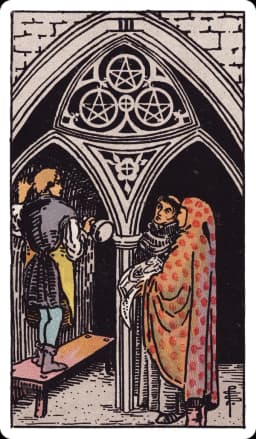
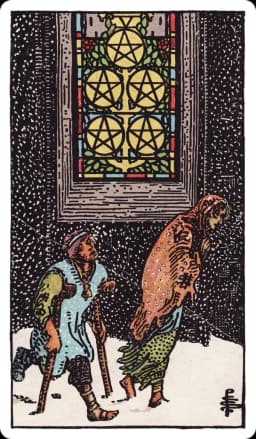
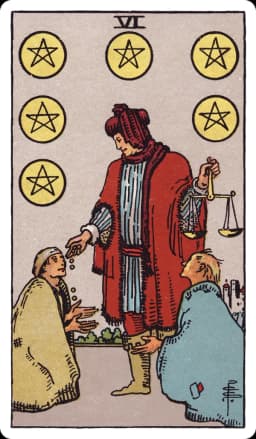
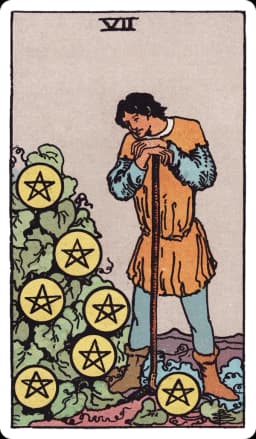
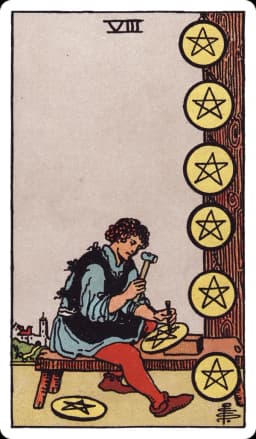
Earth, across most symbolic systems, represents what's slow, tangible, and cumulative — the opposite register from fire's quick spark or air's rapid thought. Pentacles cards are consistently the deck's most patient and grounded — its RWS artwork favors figures caught working, tending, counting, and building, activities defined by steady, incremental effort rather than sudden change. That patience is the suit's real subject: Pentacles measures whether effort is actually translating into something durable, whether that's the Three of Pentacles' collaborative craftsmanship, the Eight's disciplined skill-building, or the Ten's generational security. The suit's rulership across its decans leans on Mercury, Sun, Saturn, Jupiter, and Venus in Capricorn, Taurus, and Virgo combinations, tying earth to careful stewardship (Virgo), determined stability (Taurus), and ambitious structure (Capricorn) in roughly equal measure. Unlike Wands' visible urgency, Pentacles rarely rushes — its harder cards (the Five's material hardship, the Seven's uncertain patience, the Nine's isolated self-sufficiency) describe difficulty that develops slowly and needs to be addressed with the same patience the suit generally rewards, rather than with a single dramatic gesture. Pentacles is also the suit most directly tied to physical health and the body specifically, since 'material' in tarot's traditional reading includes the physical self, not only external wealth. The suit's three earth decans carry their own distinct flavor too: the Capricorn-ruled cards (Two, Three, Four) lean toward ambition and structural discipline; the Taurus-ruled cards (Five, Six, Seven) lean toward stubborn endurance and the slow rebuilding of stability; and the Virgo-ruled cards (Eight, Nine, Ten) lean toward careful, detail-oriented craftsmanship — a genuine shift in register across the suit's arc, even though every card shares the same underlying earth element.
How the Group Is Structured
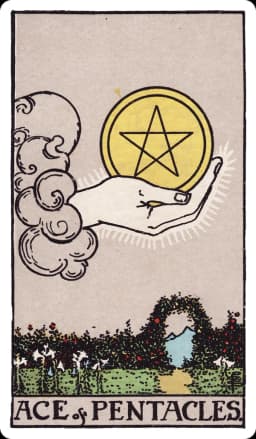
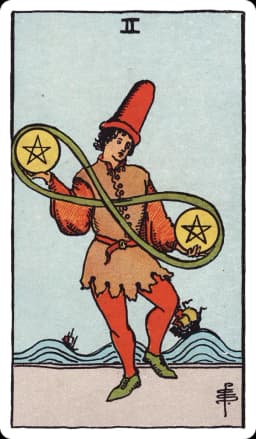
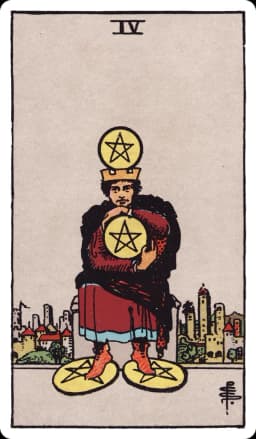
The suit's numbered sequence traces material effort from seed to harvest. The Ace offers a single, grounded opportunity — a seed worth planting. Two introduces the challenge of balancing multiple material demands at once. Three depicts collaborative skill, work recognized and built alongside others. Four turns cautious, holding tightly to what's been gained, sometimes too tightly. Five names real material hardship, difficulty severe enough to be visibly felt. Six restores balance through generosity, giving or receiving support. Seven asks for patience, tending something whose payoff hasn't fully arrived yet. Eight rewards disciplined, unglamorous skill-building, repetition that actually compounds. Nine offers self-sufficient reward, comfort earned and enjoyed independently. Ten widens that reward into lasting, multi-generational security, the suit's fullest material expression. The four court cards then trace earth's own progression from apprentice to master: the Page as an eager beginner still learning practical skill, the Knight as steady, methodical, sometimes overly cautious persistence, the Queen as nurturing, practical abundance that takes real care of what she's built, and the King as established, generous material mastery. Nothing in this suit's numbered arc arrives quickly — balance, collaboration, caution, hardship, generosity, patience, and skill each get their own card before the Ten's security, durable enough to outlast any one person, closes the sequence. It's an arc that rewards reading slowly, since its real lesson is that durable results come from steady accumulation rather than any single decisive moment.
Reading These Cards Together
A cluster of Pentacles cards in a spread usually signals that a question, whatever its stated subject, is really about material practicality — money, work, health, or physical security — more than emotion or abstract ambition, worth checking directly whether the underlying concern is really 'will this actually hold up' rather than 'do I want this.' Because the suit's arc is genuinely cumulative, several Pentacles numbers together are worth reading in sequence rather than independently — a Seven and an Eight together, for instance, describe patience and disciplined effort reinforcing each other, likely a situation that's genuinely progressing even if the payoff isn't visible yet, where a Four and a Five together suggest anxious holding colliding with real material strain, a situation where caution alone isn't going to be enough. A Pentacles court card next to a Pentacles number card often describes that grounded temperament actively managing the specific material situation the number names — a methodical Pentacles Knight beside the Seven of Pentacles, for example, reinforces that patience is being handled with real discipline rather than passive waiting. Checked against other suits, Pentacles paired with Wands often signals ambition finally getting the practical structure it needs to last, while Pentacles paired with Cups suggests material stability and emotional fulfillment needing to be weighed against each other rather than assumed to automatically align.
Cards in this group
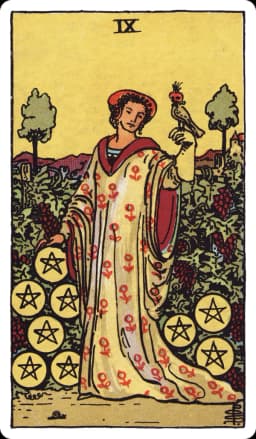
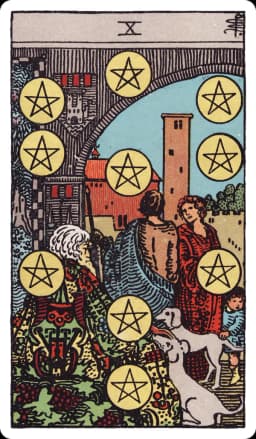
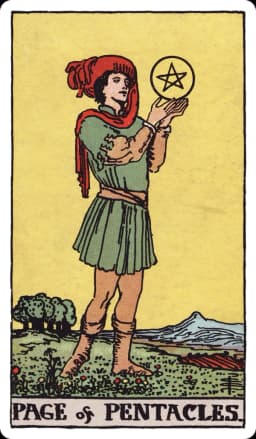
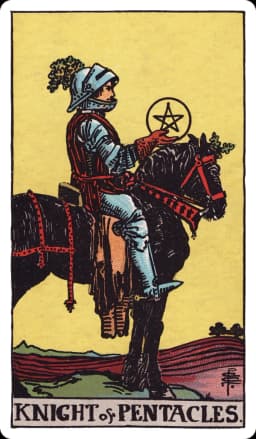
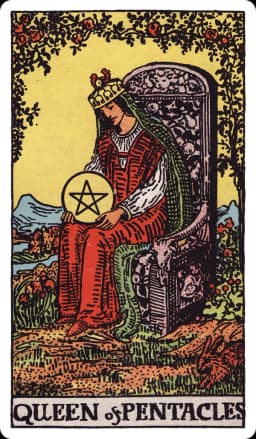
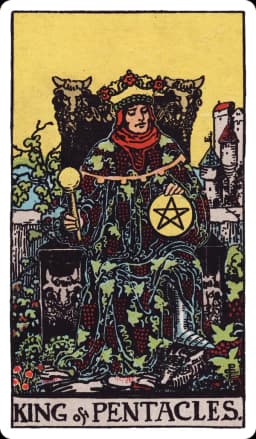
Notable Cards Worth a Closer Look
A few Pentacles cards reward closer study, whether because they bookend the suit's journey from a single planted seed to lasting security, or because they turn up constantly in money and career readings specifically.
- Ace of Pentacles — the suit's opening seed — few cards in the deck signal a genuinely solid new material opportunity as clearly as this one does.
- Ten of Pentacles — the suit's fullest expression of security, widening the Nine's personal comfort into lasting, generational stability.
- The Empress — a Major Arcana card rather than a Pentacles one, included here because her generative abundance is earth's most expansive register, a useful contrast to this suit's steadier, more disciplined accumulation.
- Seven of Pentacles — the suit's clearest picture of patience under uncertainty — worth knowing well since it's often mistaken for a stalled or negative card when its real subject is simply time not yet elapsed.
- Eight of Pentacles — the suit's clearest picture of mastery still in progress — repetition treated as its own reward, the necessary middle stage between the Ace's raw opportunity and the Nine's already-earned self-sufficiency.
Common Questions
Does Pentacles only mean money?
No — the suit's core subject is anything tangible and material, which includes physical health and the body specifically, not only finances. A Pentacles-heavy reading about health is just as native to the suit as one about a bank balance.
Why does Pentacles feel like the 'slowest' suit?
Because earth's core quality is patience and accumulation rather than sudden change, which is reflected directly in the suit's numbered arc — almost every Pentacles card describes steady, incremental progress rather than a single dramatic turn.
What's the difference between the Five and Seven of Pentacles?
The Five describes acute, visible material hardship, difficulty severe enough to be immediately felt. The Seven describes a quieter, more patient uncertainty, tending something whose results simply haven't arrived yet, without necessarily anything being currently wrong.
Where should someone start learning the Pentacles suit?
The Ace paired with the Ten is a natural starting point — a single planted seed at one end, that same seed's fullest, most lasting harvest at the other.
Why do Pentacles cards get drawn so often for career questions?
Because the suit's core subject, tangible material outcome, overlaps directly with what most career questions are actually asking: will this effort produce something durable. Pentacles cards describe the practical mechanics of building and sustaining, which makes the suit a natural fit whenever a question is really about results rather than ambition or feeling. That said, a career question can just as easily surface a Wands card if the real issue is motivation, or a Swords card if it's really about a difficult decision — Pentacles specifically answers whether the material groundwork is solid.