Minor Arcana · Pentacles
Three of Pentacles
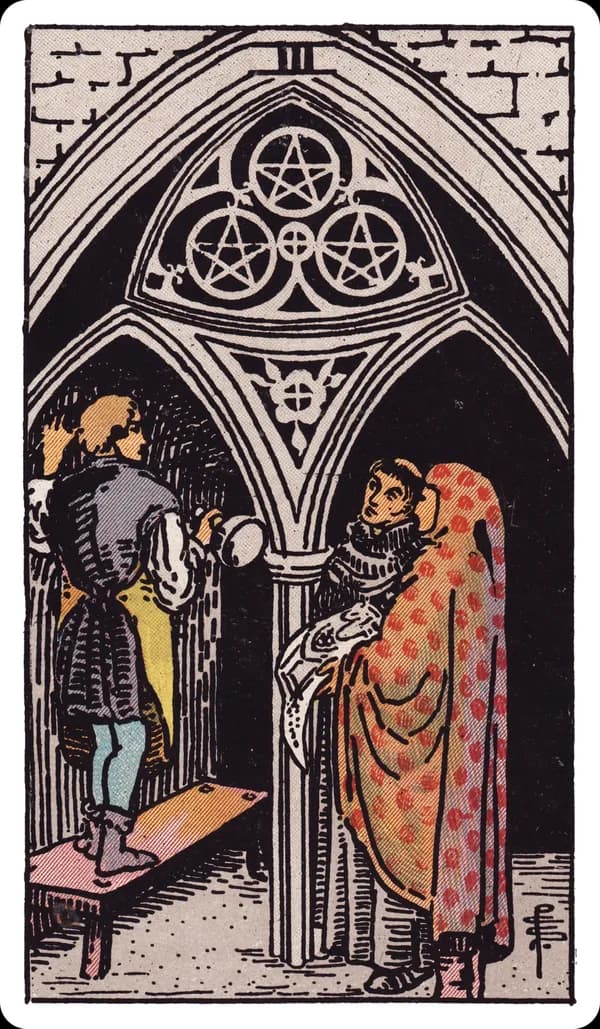
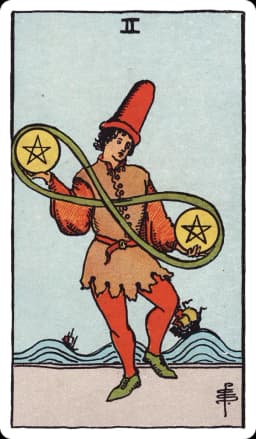
Inside a cathedral under construction, a stonemason stands on a bench, chisel in hand, pausing his carving to consult with two other figures — traditionally read as a monk representing the client's spiritual authority and an architect holding the building's plans. Three pentacles are carved into the archway directly above the conversation, positioned exactly where the mason's work and the two visitors' oversight meet. This is the first Pentacles card to show genuinely skilled, specialized labor being done in a real institutional setting rather than a solitary or symbolic one, and the first to depict more than one person actively working toward the same material goal. Where the Two of Pentacles balanced two things in one pair of hands, the Three brings in outside collaborators and outside standards — the mason's individual skill now has to satisfy someone else's plan and someone else's expectations, which is a meaningfully different kind of challenge than juggling alone.
- Element
- earth
- Ruling planet / sign
- Mars in Capricorn
- Suit
- pentacles
Numerology: Golden Dawn titles this decan the "Lord of Material Works," Mars's driving energy channeled through Capricorn's discipline into actual, finished craft. Three is the number where two separate things (the Two's pair of coins) become a working relationship with a third party involved — here, literally a client, an architect, and a builder.
Upright Meaning
Upright, the Three of Pentacles describes skilled work being recognized and validated by others, often within a genuinely collaborative team or institutional structure — a project where your specific expertise is both needed and respected by the people you're working alongside. It favors situations where individual craft meets shared purpose: not working alone toward a personal goal, but contributing real, specialized skill to something bigger than any one person could build. This is a strong card for apprenticeship reaching a turning point, a first project where your competence is taken seriously by more experienced collaborators, or simply a stretch of work where quality and teamwork are both genuinely present at once. It also carries a note about standards: the mason's work has to satisfy the architect's plan, not just his own sense of a job well done, which makes this a card about skill being tested against external expectations rather than judged purely on personal effort. In a reading about a creative or professional project, the upright Three of Pentacles is a genuinely good sign that collaboration is working the way it's supposed to — distinct roles, mutual respect, and a shared standard everyone is actually meeting.
Reversed Meaning
Reversed, the Three of Pentacles points to collaboration breaking down — mismatched expectations between a worker and the people evaluating their work, a team that isn't actually pulling in the same direction, or a finished result that falls short of the standard it was supposed to meet. This can look like a project where everyone involved has a different idea of what 'done well' actually means, leading to friction that has less to do with any one person's laziness and more to do with poor coordination between roles. It can also describe skilled work going unrecognized or unrewarded — competence that's genuinely there but isn't being validated by the people whose approval or investment matters for the project to move forward. A specific reading concerns quality itself slipping: corners cut, standards lowered, or a rushed result that wouldn't hold up to the kind of careful architectural review the upright card's mason submits to willingly. Whichever version applies, the reversed card usually points back to a mismatch between individual contribution and collective standard — either the collaboration itself has broken down, or the work being produced within it has stopped meeting the bar everyone originally agreed to.
Read the full reversed meaning →Symbolism
The cathedral setting matters as much as any single figure in it: this is a building meant to stand for generations, worked on by craftsmen who will likely never see it finished, which frames the mason's careful, unhurried carving as work done for something larger than immediate personal reward. The mason's elevated position on the bench, working at the same height as the carved pentacles above the group, visually equates his physical labor with the finished result the other two are there to evaluate — competence made visible rather than just claimed. The architectural plans held by the second figure represent a standard the mason's work has to meet that exists independently of his own judgment; skill alone isn't the whole picture here, skill applied toward someone else's specification is. The monk-like third figure is often read as representing either a religious patron or simply the voice of an audience the work is ultimately for, adding a layer of purpose beyond the craftsman's personal satisfaction in the work itself. Unlike the isolated labor shown later in the Eight of Pentacles, this scene is explicitly social — three distinct roles (maker, evaluator, patron) working the same project from different vantage points, which is precisely why collaboration reads as this card's central theme rather than simple competence on its own.
The Three of Pentacles from the Rider-Waite-Smith deck: a stonemason stands on a workbench carving an archway inside a cathedral, showing his plans to a monk and a robed figure holding architectural drawings, with three pentacles carved into the stonework above them.
→ See what Mars in Capricorn means in your horoscope on GetMyHoro
→ Find your own life-path number on NumberAngel
In Love
In a relationship reading, the Three of Pentacles describes a partnership functioning like genuine teamwork — two people (or a couple plus outside support, like family or a counselor) actively building something together with distinct roles, mutual respect, and shared standards for what the relationship should look like. For someone partnered, this can mark a stretch where practical collaboration on shared goals (a home, a family plan, a joint project) is going well specifically because both people are bringing real skill and taking the other's input seriously, the way the mason takes the architect's plan seriously rather than working purely on instinct. For someone single, it can describe dating with a genuine sense of building toward something specific and structured, rather than drifting — approaching connection with intention and a clear sense of what 'good' looks like, the same standard the card's mason holds himself to. Reversed, the collaboration itself is what's faltering — differing expectations about what the partnership is supposed to become, one person doing the emotional labor of building while the other isn't matching that investment, or outside input (family, friends, prior relationship patterns) creating friction rather than genuine support. It's less a card about love being absent and more a card about the teamwork required to build something lasting currently being out of sync.
Read the full love meaning →In Career
At work, the Three of Pentacles favors skilled collaboration going well above almost anything else in the deck — a project where your specific expertise is genuinely valued by teammates, a client relationship built on mutual respect for what each side brings, or a body of work finally being recognized by people whose opinion carries real weight for your career. It favors situations with clear roles and a shared external standard, like the mason's plan-driven cathedral work, over solo efforts measured only against personal satisfaction. This is also a fitting card for apprenticeship or mentorship reaching a genuine turning point — the moment a more experienced collaborator starts treating your input as something worth consulting rather than simply supervising. Reversed, the career reading turns toward collaboration that isn't working: a team with misaligned goals, a project where the standard being aimed for was never actually agreed on by everyone involved, or skilled work that isn't getting the recognition or resourcing it needs to move forward. It can also describe quality genuinely slipping — a rushed deliverable, a shortcut that undermines the project's overall standard — either from your own end or a collaborator's. A direct conversation about what 'done well' actually means to everyone involved tends to resolve more of this than extra individual effort does, since misalignment on that basic point is usually the real problem underneath the friction.
Read the full career meaning →Money & Health — Reflection Themes
Money: This is one of the more encouraging Pentacles cards for money earned specifically through skilled, valued work — a contract paid fairly because the client genuinely respects the craftsmanship behind it, or income that reflects real, demonstrable expertise rather than luck or volume alone. As a theme for financial reflection, the upright Three of Pentacles often points toward the value of investing in your own skill development, since the mason's income here flows directly from competence that took real time to build. It can also describe a financial collaboration going well — a joint venture, a shared project, or pooled resources where everyone's contribution is genuinely respected and fairly accounted for. Reversed, the picture shifts to a financial arrangement where contributions or expectations don't match: underpayment for skilled work, a joint financial project where one party isn't pulling their weight, or income that isn't reflecting the actual quality or effort behind it. It can also describe cutting corners financially in a way that undermines the eventual result — a cheap fix that costs more later, or a shortcut taken to save money that compromises something meant to last. Worth reflecting on if this card comes up reversed: whether the standard you're being paid to meet, or the one you're paying someone else to meet, is genuinely being honored on both sides.
Health: As a theme for reflection, the upright Three of Pentacles can describe healing or wellness work done in genuine collaboration — following a care plan built together with a doctor, trainer, or therapist rather than going it alone, or a treatment approach that's working specifically because everyone involved (patient, practitioner, support system) is coordinated around the same clear standard for what recovery or progress looks like. It favors trusting the expertise of others as part of your own care, the same way the mason submits his individual skill to the architect's larger plan, rather than treating input from professionals as something to resist. Reversed, this same card can point to a mismatch between what a health plan calls for and what's actually being followed through on — conflicting advice from different sources, a care team that isn't well coordinated, or your own effort and a provider's guidance pulling in different directions rather than working together. No particular diagnosis attaches to this card; read it here as a prompt to check whether the different people and pieces involved in your physical or mental wellbeing are currently working from the same shared plan.
Spiritual Meaning
This card frames spiritual growth as something built collaboratively rather than achieved in total solitude — a reminder that even deeply personal development often benefits from teachers, mentors, a community, or simply people who hold you to a standard higher than the one you'd set for yourself alone. The mason's careful, skilled work inside a cathedral meant to outlast him suggests a spiritual practice oriented toward something bigger than immediate personal benefit — contributing genuine craft and care to something that serves a purpose beyond your own life, the way generations of unnamed builders worked on real cathedrals without living to see them finished. Drawing this card can mark a season where spiritual or personal growth is happening specifically through relationship — a teacher, a study group, a mentor whose expertise you're genuinely willing to be shaped by — rather than through solitary reflection alone. It's also a fitting card for recognizing that skill and spirit aren't separate categories: the patient, disciplined work of getting genuinely good at something can itself be a spiritual practice, not merely a practical one.
Yes or No?
For yes/no questions, the Three of Pentacles leans toward 'yes, provided the collaboration holds together' — a genuinely favorable answer for questions about teamwork, skilled projects, or work being recognized, but one that comes with a built-in condition rather than an unconditional guarantee. Because the card's central image is three distinct roles working successfully toward the same standard, questions about whether a group effort or professionally collaborative situation will go well tend to get a confident answer, while questions about purely solo undertakings are a slightly less natural fit for this card's specific territory. Reversed, the yes weakens into a caution that the collaboration or standard alignment isn't currently there — not necessarily a flat no, but a signal that the different people or pieces involved need to get on the same page before a good outcome is likely. If this card comes up reversed for a question involving other people's cooperation, the more useful next step is usually clarifying expectations directly with everyone involved rather than assuming the underlying plan itself is doomed.
Read the full yes-or-no breakdown →Frequently Asked Questions
Who are the two figures the mason is talking to in the Three of Pentacles?
Notice they represent two genuinely different kinds of authority, one spiritual and one technical, rather than two versions of the same oversight. That distinction matters practically: satisfying a client's purpose and satisfying a technical spec are separate tests, and craft that passes one doesn't automatically pass the other.
Is the Three of Pentacles a good card for a job interview or new collaboration?
It's a genuinely favorable card for that context, since it describes skilled work being taken seriously and respected by others. It suggests your competence is likely to be recognized, provided the collaboration itself is built on clear, shared expectations.
How is the Three of Pentacles different from the Eight of Pentacles?
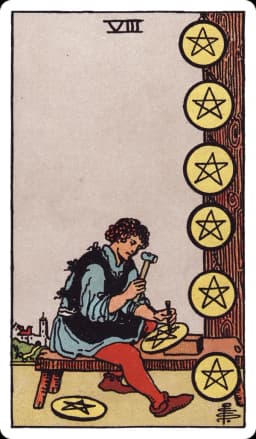
Both are craft-focused cards, but the Three is explicitly social — skilled work done in front of and validated by others within a shared project. The Eight of Pentacles describes solitary, repetitive skill-building, focused inward on mastery for its own sake rather than external collaboration or recognition.
Does the Three of Pentacles always mean the work will be perfect?
No — it points to genuine competence and good-faith collaboration toward a shared standard, not flawless execution. The cathedral itself takes generations to complete; this card is about the work currently meeting its intended standard, not about the project being finished or perfect.
Related Cards
Spreads that read Three of Pentacles
- Career Path Spread — 5 positions, intermediate
- Star Spread — 7 positions, intermediate
Where Three of Pentacles sits in the deck
Card correspondences sourced from the Hermetic Order of the Golden Dawn tradition — see our methodology.