Major Arcana · Major Arcana
Death
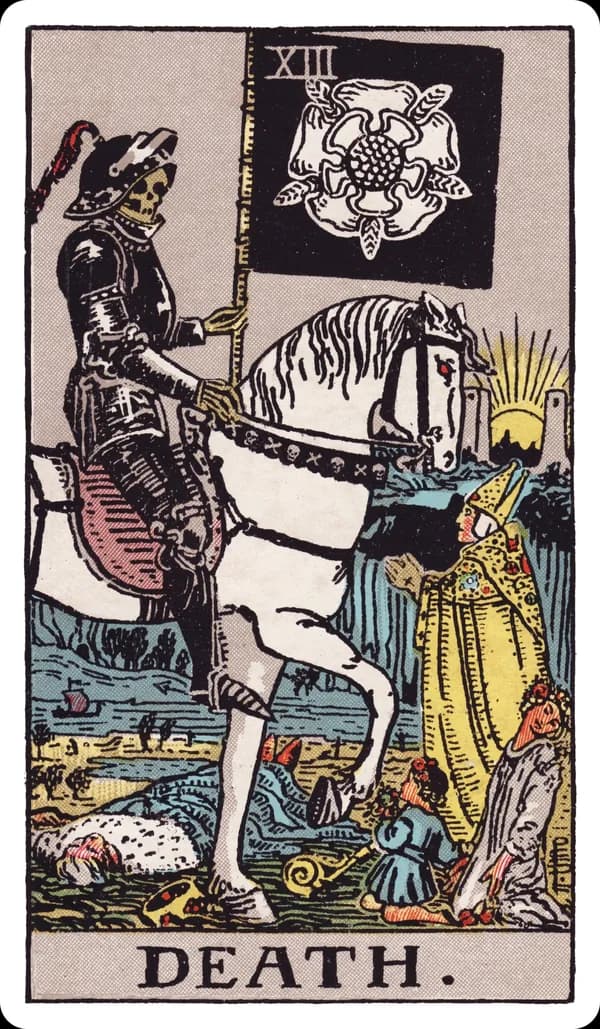
Death is the most misread card in the entire deck, and the misreading matters enough to name directly: this card almost never predicts literal physical death, and tarot readers have said so consistently for as long as the practice has been documented. A skeleton in black armor rides through the scene on a white horse, carrying a banner marked with a white rose — the same mystic rose symbolizing purity and new beginnings that appears elsewhere in the deck — and everyone the skeleton passes reacts differently: a king lies already fallen, a maiden kneels in apparent submission, a child reaches up unafraid, and a bishop meets the skeleton's approach with calm acceptance rather than terror. Numbered XIII, right after the Hanged Man's willing pause, Death represents the necessary, often uncomfortable ending that clears space for something genuinely new — a relationship, a job, a habit, an old identity that has run its course and needs to end cleanly before whatever comes next can actually begin.
- Element
- water
- Ruling planet / sign
- Scorpio
Numerology: Thirteen reduces to four (1+3) and rebuilds the Emperor's structure from the ground up — but only after the old structure has first been fully dismantled. It's traditionally read as a number of profound transformation rather than simple bad luck, marking an ending so complete that whatever comes after it has to be genuinely rebuilt rather than merely repaired.
Upright Meaning
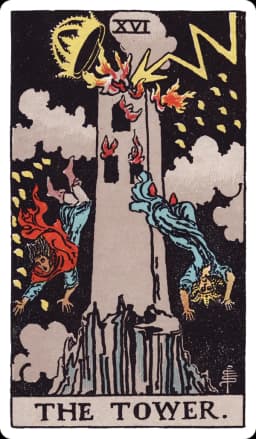
Upright, Death represents a genuine, significant ending — one that, however difficult in the moment, clears the way for real transformation and renewal. This card favors letting go of what has clearly run its course rather than clinging to it: a relationship, a job, a habit, an old belief about yourself, or any structure that has outlived its usefulness and needs to end cleanly before something new can take its place. Unlike the Tower's sudden, violent collapse later in the deck, Death's ending, while still significant, tends to be recognizable coming — it's the culmination of a process, not a random shock, even when the actual moment of ending still catches you off guard emotionally. This card asks for honest acceptance rather than resistance: the same choice the bishop in the artwork makes, meeting the inevitable with calm rather than fighting it. In a reading, Death often shows up during a genuine life transition — the end of one chapter and the not-yet-visible beginning of another — and it favors trusting that whatever's ending needs to end, even without full clarity yet about what comes after.
Reversed Meaning
Reversed, Death signals resistance to a change that's genuinely necessary. The most common reading is fear of the inevitable: clinging tightly to something that has clearly run its course — a relationship, a job, an old identity — because the ending, however necessary, feels too frightening or too final to accept. A second reading is stagnation: a situation stuck in a kind of suspended half-life, neither fully ending nor genuinely continuing, because the transformation this card represents is being avoided rather than allowed to complete. A third reading points to resistance more broadly: fighting against an obvious, needed change with everything you have, prolonging a painful transition rather than letting it happen cleanly, which tends to make the eventual ending harder and messier than it needed to be. Reversed Death is one of the deck's clearer reminders that resisting an ending doesn't actually prevent it — it usually just delays it and makes the eventual transition more difficult, since whatever has genuinely run its course rarely responds well to being artificially propped up.
Read the full reversed meaning →Symbolism
The white rose on the skeleton's black flag directly echoes the Fool's white rose and the Magician's garden, reinforcing that this card, however grim its central figure looks, is fundamentally connected to purity and fresh beginnings rather than to destruction for its own sake. The sun rising between two distant towers in the background is easy to miss but essential to the card's meaning: even amid this scene of visible ending, a new day is already beginning on the horizon, unmistakably signaling renewal rather than a final, closed-off conclusion. The different reactions of the four human figures the skeleton passes — a fallen king, a kneeling maiden, a pleading child, a calm bishop — represent different ways people respond to necessary change: resistance, mourning, fear, and acceptance, all valid responses to the same inevitable process. Scorpio's rulership, a water sign traditionally associated with intensity, depth, and transformation, reinforces the card's core theme — this isn't a gentle, easy transition but a genuinely deep one, the kind of change that reaches into identity and structure rather than staying at the surface.
Death from the Rider-Waite-Smith deck: a skeleton in black armor rides a white horse carrying a black flag bearing a white five-petaled rose, passing a fallen king on the ground, a kneeling maiden, a pleading child, and a bishop who meets its gaze calmly, with the sun rising between two distant towers and a river flowing in the background.
→ See what Scorpio means in your horoscope on GetMyHoro
→ Find your own life-path number on NumberAngel
In Love
Death upright often names the genuine ending of a relationship, dynamic, or pattern that has run its course — not necessarily the whole relationship, but sometimes a specific old version of it, a phase or an unhealthy habit, that needs to end so something healthier can take its place. Single, this card can point toward genuinely closing the door on a past relationship or pattern — releasing an old attachment fully rather than half-holding onto it, which tends to be necessary before real space opens up for something new. Partnered, it can describe a relationship undergoing real, significant transformation: an old dynamic ending to make room for a deeper, more honest one, or, less comfortably, a relationship that has genuinely run its course and needs to be allowed to end rather than artificially extended. Reversed, the caution points toward resisting a needed ending — staying in a relationship or clinging to a dynamic well past the point it's serving either person, out of fear of the unknown rather than genuine hope the relationship can still work. It can also describe a relationship stuck in stagnant limbo, neither ending nor genuinely moving forward, because the necessary transformation keeps being avoided.
Read the full love meaning →In Career
At work, Death often points toward a genuine, significant professional transition — the end of a job, a role, or a way of working that has run its course, clearing space for real growth even though the transition itself may feel unwelcome or unsettling in the moment. This card favors accepting an ending you can already sense is coming rather than fighting to preserve a situation that's clearly no longer working, trusting that the space it clears will eventually be filled by something better suited to who you've become. It can also describe letting go of an old professional identity or way of working that no longer fits — a role, a title, or a way of operating you've genuinely outgrown. Reversed, the caution points toward resisting a professional change that's clearly needed — staying in a job or an approach well past its natural end out of fear rather than genuine opportunity, or a career situation stuck in stagnant limbo because a necessary transition (a layoff that should have happened, a role that should have been left) keeps being delayed or avoided. It can also describe fighting to preserve an outdated way of working rather than allowing genuinely necessary professional transformation to happen.
Read the full career meaning →Money & Health — Reflection Themes
Money: As a theme for financial reflection, Death upright can point toward genuinely closing out an old financial chapter — paying off a debt, ending a financial arrangement that's run its course, or releasing an old financial habit or belief that no longer serves your current situation. This card favors accepting a significant financial transition rather than fighting to preserve an old approach that's clearly stopped working, trusting that a real ending here clears space for a healthier pattern to take its place. Reversed, watch for clinging to an outdated financial plan, an unsustainable spending pattern, or an arrangement that's clearly run its course, out of fear or attachment to the familiar. It can also describe a financial situation stuck in stagnant limbo, where a necessary transition — closing an account, ending an arrangement, adjusting a plan — keeps being avoided rather than allowed to happen.
Health: This card can point toward genuinely releasing an old habit, pattern, or approach to your wellbeing that has run its course — ending a routine that's stopped serving you, or letting go of an old identity or belief about your body that no longer fits your current situation. It favors accepting a significant transition in how you care for yourself rather than clinging to a familiar but outdated approach. Worth being clear that this card does not traditionally predict literal physical death — tarot readers have consistently reassured clients of this for as long as the practice has been documented; its meaning here is about transformation and ending an old pattern, not a medical forecast. Reversed, watch for continuing an approach that clearly isn't serving you out of fear of the unfamiliar, or a health situation stuck in stagnant limbo because a necessary shift keeps being avoided.
Spiritual Meaning
A skeleton rides calmly through this card's scene, and the sun still rises between two distant towers in the background — even amid visible ending, a new day is already beginning on the horizon. Spiritually, this card represents the deep transformation that comes from genuinely releasing an old identity or way of being: not a literal ending, but the death of an old self or pattern that clears the way for real growth. As the thirteenth numbered trump, following the Hanged Man's willing pause, it represents the actual completion of that surrender — the old structure finally, fully released rather than merely suspended. When this card appears, it usually marks genuine, significant transformation already underway or approaching — an invitation to release an old identity, belief, or pattern honestly and completely, trusting whatever comes after will be built on more solid ground.
Yes or No?
For yes/no questions, Death is best read as a 'yes' to transformation and genuine change, though it's a distinctive kind of yes worth understanding carefully: it affirms that something is ending and something new is beginning, which is a favorable answer for a question about whether real change will happen, but a much more complicated answer for a question about whether a specific existing thing (a relationship, a job, a situation exactly as it currently is) will continue. If your question is really 'will this situation transform into something new,' Death affirms it. If your question is 'will this stay the same,' Death is closer to a clear 'no' — this card doesn't support preservation of the status quo. Reversed, the answer shifts toward a caution about resistance: change that needs to happen is currently being fought or delayed, which the honest reading treats as 'not yet, because something is being held onto that needs to be released first.' What's actually being resisted matters more here than assuming the card's outcome either way, since the transformation this card represents tends to happen eventually regardless of the resistance.
Read the full yes-or-no breakdown →Frequently Asked Questions
Does the Death card mean someone is going to die?
No — that fear is the single most common misreading a new tarot student brings to this card, and it's worth naming directly because it keeps people from hearing what the card is actually saying: an old identity, relationship, or chapter reaching its natural end so a new one can begin. If literal mortality genuinely worries you, that's a medical question for a doctor, not something any card can answer.
Why does Death carry a flag with a white rose?
The white rose echoes the same symbol of purity and fresh beginnings found on the Fool's card and in the Magician's garden, signaling that this card, despite its unsettling central figure, is fundamentally connected to renewal rather than destruction for its own sake.
What's the difference between Death and the Tower?
Death represents an ending that, while significant, is usually the recognizable culmination of a process already underway — something that's clearly been building toward this point. The Tower represents a much more sudden, unexpected collapse, arriving as a shock rather than as the visible conclusion of a longer transition.
Is Death always a hard card to receive?
It can feel that way in the moment, since it names a real, significant ending, but its deeper meaning is genuinely hopeful — the sun rising in the card's background signals renewal following the transition. Most readers treat it as one of the more transformative, ultimately positive cards, provided the necessary ending is accepted rather than resisted.
Related Cards
Spreads that read Death
- Five-Card Spread — 5 positions, beginner
- Astrological Zodiac Wheel Spread — 12 positions, advanced
Where Death sits in the deck
Card correspondences sourced from the Hermetic Order of the Golden Dawn tradition — see our methodology.