Wands
The suit of Wands governs the fire element — passion, ambition, creativity, and forward motion. Its 14 cards trace fire's Golden Dawn decan attributions through Aries, Leo, and Sagittarius, tarot's three fire zodiac signs. Wands cards tend to describe the energy behind an action more than the action's practical outcome, which is Pentacles' territory — a Wands-heavy reading often signals a moment defined by drive, initiative, or conflict rather than by material results.
→ Explore wands symbolism further on SymbolHubs
Element and Core Theme
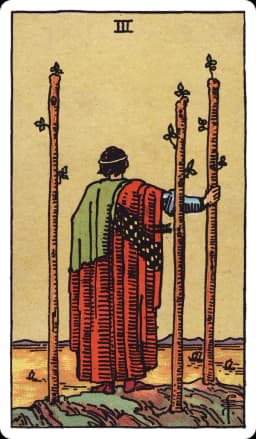
Fire, across most symbolic traditions, represents what initiates rather than what sustains — the spark that starts something, the will that pushes a project forward, the competitive or creative drive that wants to act rather than plan indefinitely. Wands cards are consistently the deck's most kinetic — its RWS artwork almost always shows figures mid-motion — racing, climbing, building, fighting — rarely seated or still the way several Cups or Pentacles cards depict their figures. That restlessness is the suit's real subject: Wands describes the quality and direction of a person's drive, whether that drive is being channeled productively (the Three of Wands' forward-looking ambition) or burning without a clear outlet (the Five of Wands' scattered competitive conflict, the Ten of Wands' overloaded burnout). Fire's rulership across the suit leans heavily on Mars and the Sun in its various decans, reinforcing the suit's association with assertive, sometimes combative energy — Wands is the suit most likely to describe genuine conflict, competition, and rivalry, not because fire is inherently hostile, but because unchecked drive naturally collides with other people's competing drives. Unlike water's emotional depth or earth's material patience, fire burns quickly and visibly; Wands readings often carry real urgency, describing a moment that wants a decision or an action now rather than careful, extended deliberation.
How the Group Is Structured
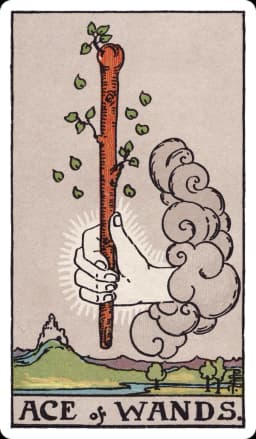
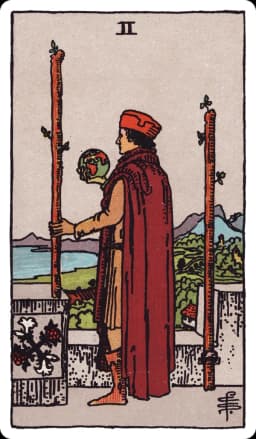
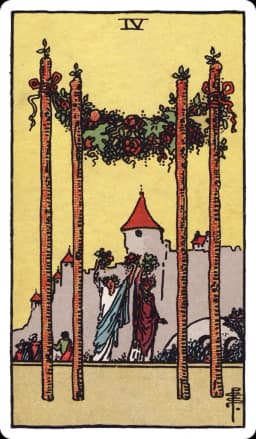
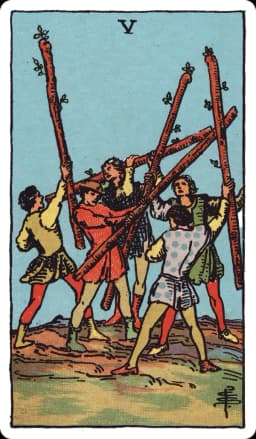
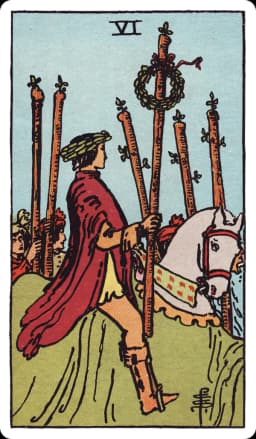
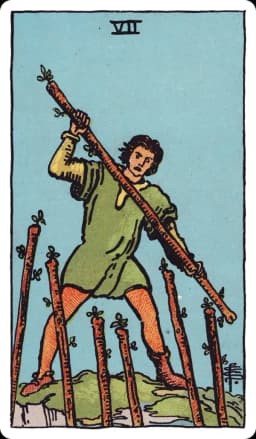
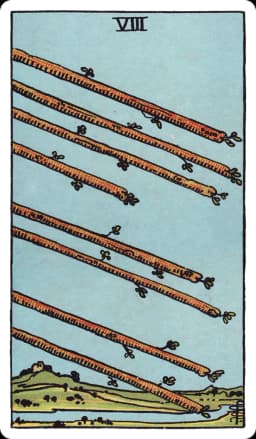
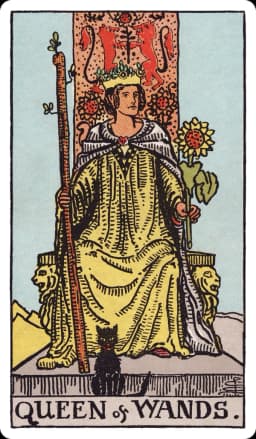
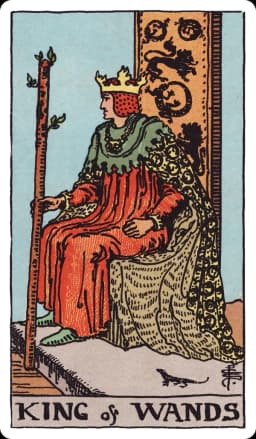
The suit's numbered sequence traces ambition from spark to consequence. The Ace is pure creative or entrepreneurial potential, a single idea catching fire. Two and Three extend that spark into planning and genuine forward momentum, mapping a path and then actually setting out on it. Four marks the suit's first real celebration, a foundation stone laid and worth pausing to acknowledge. Five introduces friction: competition, minor conflict, several people pulling in different directions at once. Six offers a public win, recognition for effort already spent. Seven turns defensive, holding a hard-won position against new challengers. Eight accelerates suddenly, rapid unblocked movement after a period of delay. Nine describes exhausted vigilance, wary but still standing after real difficulty. Ten culminates in overload, carrying more responsibility than one person can comfortably sustain. The four court cards then describe fire's temperament at different stages of maturity: the Page as an enthusiastic beginner still finding direction, the Knight as bold, sometimes reckless forward charge, the Queen as confident, warm, self-assured leadership, and the King as visionary command that's learned to direct fire's energy rather than simply burn with it. Momentum builds fast in this suit's numbered cards and rarely holds steady — friction, recognition, defense, and acceleration all crowd the middle stretch before the whole arc tips into the Ten's overload, a shape less steadily upward than Pentacles' and more genuinely combustible, mirroring how ambition and drive actually tend to rise and collide with obstacles in real pursuits.
Reading These Cards Together
A cluster of Wands cards in one spread is usually the clearest sign that a question is really about drive, timing, or conflict rather than about the underlying resources or feelings involved — worth asking directly whether the real issue is having enough energy or will pointed in a clear direction, rather than whether the resources or support exist. Because so many Wands cards depict competition and friction (the Five, Seven, and reversed Nine especially), several Wands cards together often describe an actively contested situation — multiple people or forces pulling toward different outcomes — more than a settled one. Pairing an early-sequence Wands card (Ace through Three) with a late one (Nine or Ten) can describe the full arc of a single undertaking, from its original spark through to its current, possibly exhausting cost — worth checking whether the enthusiasm that started something is still present, or whether it's curdled into the burnout the later cards depict. A Wands court card next to a Wands number card often describes that fire temperament actively driving the specific situation the number names — a reckless Wands Knight beside the Five of Wands, for instance, tends to describe someone actively fueling a conflict rather than simply caught in one. Checked against other suits, Wands paired with Swords often signals drive without enough clear thinking behind it, while Wands paired with Pentacles suggests ambition finally being matched with the practical structure needed to actually sustain it.
Cards in this group
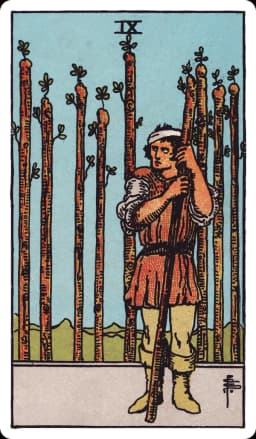
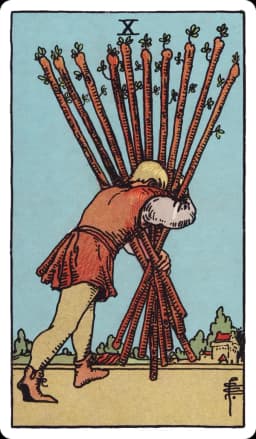
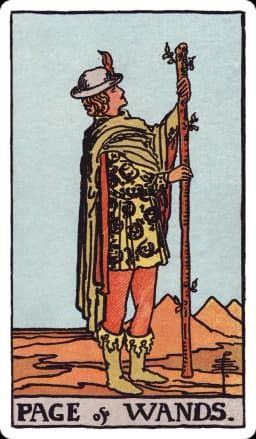
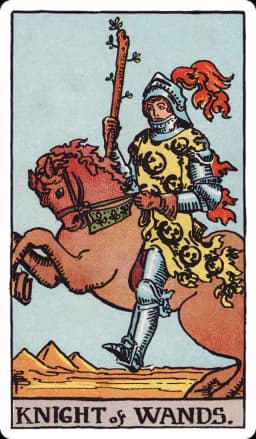
Notable Cards Worth a Closer Look
A few Wands cards reward closer study, whether for their place at either end of the suit's spark-to-overload arc, or because they're commonly drawn in readings about starting something new.
- Ace of Wands — the suit's opening spark — few cards in the deck signal genuine creative or entrepreneurial inspiration as directly as this one does.
- Ten of Wands — the suit's overload card, and a useful companion read to the Ace — the same fire, later, carrying more than it can comfortably hold.
- The Tower — outside this suit numerically, since it belongs to the Major Arcana, though fire's most dramatic single expression of sudden upheaval belongs here in spirit — uncontrolled combustion rather than this suit's usual directed drive.
- Five of Wands — the clearest single picture of this suit's competitive, scattered-energy side — worth knowing well since it's frequently confused with genuine hostility when it's closer to noisy, unresolved friction.
- Three of Wands — the suit's clearest picture of early momentum actually paying off — ships already sent out, watched from a cliff's edge with real, earned optimism rather than untested hope.
Common Questions
Does Wands always mean conflict or competition?
Not always, but friction shows up more often in this suit than in the other three, since fire's drive naturally runs into other people's competing drives. Several Wands cards (the Three, Six, Queen) describe confident, unopposed momentum rather than conflict specifically.
What's the difference between Wands' ambition and Pentacles' ambition?
Wands describes the energy and will behind pursuing something — the spark and the drive. Pentacles describes the practical, material result of sustained effort — what's actually been built or secured. A reading with both suits often describes ambition finally getting matched with the follow-through needed to make it last.
Why do so many Wands court cards get read as literal people?
Court cards across all four suits are commonly read as real people in a querent's life, but Wands courts in particular tend to be read this way for bold, high-energy, entrepreneurial personalities, since the suit's temperament reads clearly onto real people readers actually know.
Which Wands card is the best starting point?
Pair the Ace with the Five for a useful contrast — pure, unblocked spark on one end, and the suit's clearest depiction of that same energy running into real friction on the other.
What does it usually mean if a spread comes back almost entirely Wands?
It's a strong signal that timing and drive matter more right now than resources or feelings — a moment that wants decisive action rather than more deliberation. Because the suit's numbered arc moves quickly from spark to overload, an all-Wands spread is also worth checking for exhaustion: enthusiasm that hasn't yet been paired with rest tends to show up later as the suit's harder cards, the Five's friction or the Ten's burnout. Treat a Wands-dominant reading as encouragement to move, tempered by an honest look at how sustainable the current pace actually is.