Court Cards
The 16 court cards — Page, Knight, Queen, and King of each of the four suits — sit apart from the numbered pip cards (Ace through Ten). Each rank carries its own sub-element within the Golden Dawn system (Page = Earth, Knight = Air, Queen = Water, King = Fire), layered onto the suit's own element, giving each court card a distinct "double element" character. Court cards are traditionally read either as a stage of mastery within that suit's territory, or — especially in relationship and workplace readings — as an actual person in the querent's life whose temperament matches the card.
→ Explore court cards symbolism further on SymbolHubs
Element and Core Theme
What makes the 16 court cards a genuinely distinct group, rather than simply the top four cards of each suit, is this double-element structure: a Page carries the suit's element plus Earth (a beginner grounded in fresh, practical curiosity), a Knight carries the suit's element plus Air (movement and pursuit, sometimes impulsive), a Queen carries the suit's element plus Water (that element internalized and matured into steady, felt mastery), and a King carries the suit's element plus Fire (that element directed outward as active, confident authority). This means a Cups Queen isn't simply 'a woman who feels deeply' — she's water's emotional depth combined with water's own maturing, internalizing quality, doubled, which is part of why court Queens across all four suits tend to read as the suit's most settled, self-possessed temperament. Similarly, a Wands Knight isn't simply 'an ambitious man' — he's fire's drive combined with air's restless movement, which is part of why Knights across the deck are consistently the court's most action-prone, sometimes reckless rank. This double-element logic is what lets all 16 court cards function as one coherent group rather than four disconnected sets of four: the rank (Page, Knight, Queen, King) describes a consistent kind of energy across every suit, while the suit itself describes what that energy is actually being applied to.
How the Group Is Structured
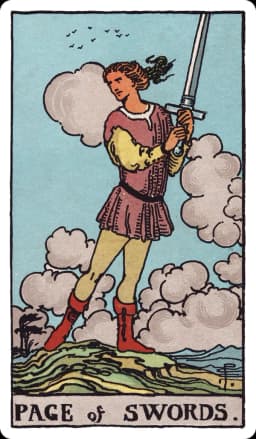
Read as a group, the 16 courts form a grid rather than a line: four ranks (a consistent progression from beginner to master) crossed with four suits (four different domains that progression plays out in). The rank progression itself is the clearest throughline. Pages are consistently beginners — curious, still learning, sometimes naive, but genuinely open in a way the more established ranks have often lost. Knights are consistently in motion — pursuing a goal directly, often impulsively, the court's most action-oriented and least settled rank. Queens are consistently mature and internalized — each suit's qualities held with real depth and steadiness rather than performed outwardly. Kings are consistently established authorities — each suit's qualities directed outward with confidence and, ideally, real skill rather than raw force. Reading a Page as a real person usually means someone new to a situation; reading a King as a real person usually means someone with genuine, earned authority in that same territory. What differs suit to suit is the domain: a Wands Page is curious about a new venture or passion, a Cups Page is curious about a new feeling or relationship, a Swords Page is curious about a new idea or piece of information, and a Pentacles Page is curious about a new practical skill or opportunity — same beginner's energy, four different arenas it shows up in.
Reading These Cards Together
When multiple court cards appear in one spread, the first useful question is whether they're describing several different people in a querent's life, one person shown from different angles, or the querent's own temperament shifting across different situations — context and the surrounding cards usually settle which reading applies. Two court cards of the same rank but different suits (say, a Cups Queen and a Pentacles Queen) can describe the same underlying maturity and self-possession being expressed in two different domains — emotional steadiness in one area of life, material steadiness in another — worth checking whether that consistency is actually showing up, or whether one area lags noticeably behind the other. Two court cards of the same suit but different ranks (a Wands Page and a Wands King, say) can describe a single arc of development within that suit's territory, a beginner's early curiosity next to what that same domain looks like at full mastery — useful for a reading about growth or timeline specifically. When a court card sits beside a number card from the same suit, the court card often describes the temperament actively navigating whatever the number card names — a steady Pentacles Queen beside the Five of Pentacles, for instance, suggests real material hardship being met with genuine resourcefulness rather than panic. Because court cards carry more ambiguity than number cards (person, energy, or self all being valid readings), it's worth deliberately asking the spread's other cards which interpretation actually fits before settling on one.
Cards in this group
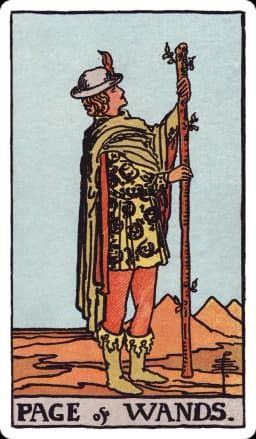
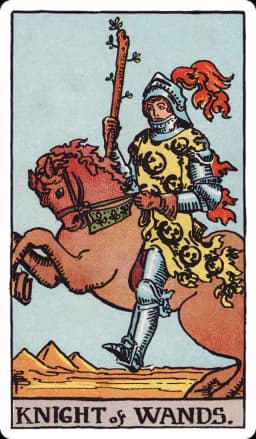
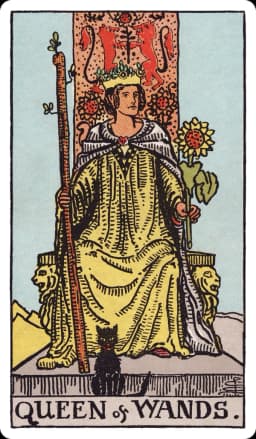
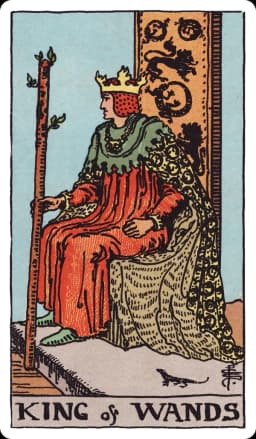
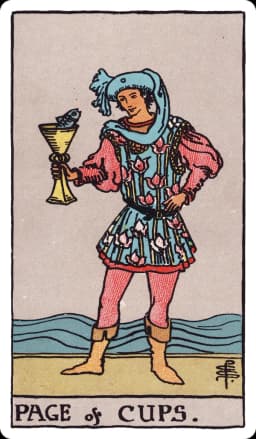
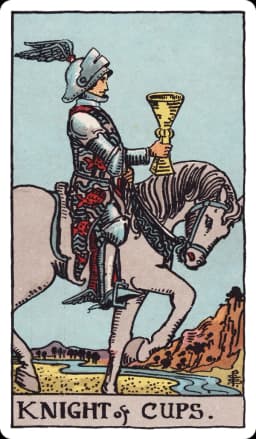
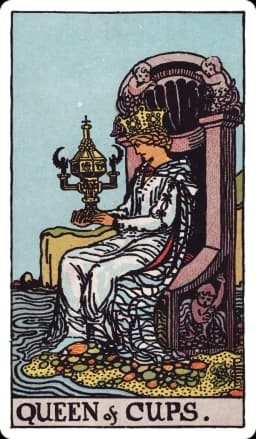
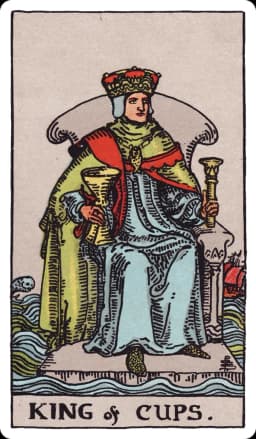
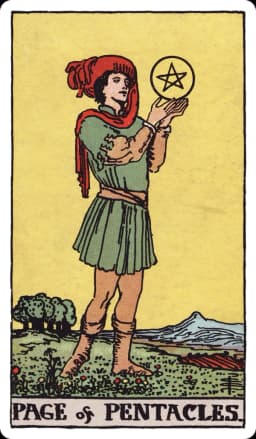
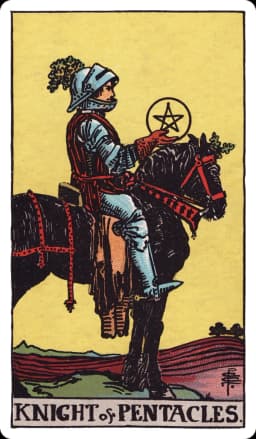
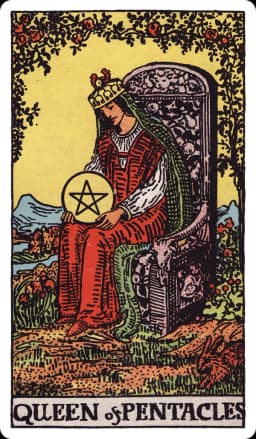
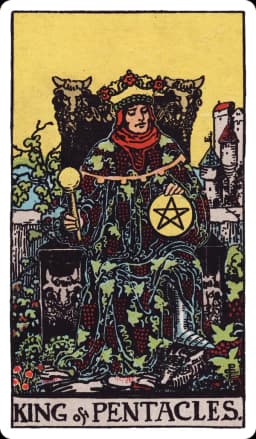
Notable Cards Worth a Closer Look
A few court cards are worth knowing individually well, either because they're the rank most often read as literal people, or because they anchor the double-element logic that ties the whole 16-card group together.
- The High Priestess — belongs to the Major Arcana rather than the court itself, but her intuitive stillness is the clearest non-court illustration of what the four Queens, doubled with Water, are all reaching for.
- King of Pentacles — widely read as the court's clearest 'established success' figure — earth's material mastery directed outward with genuine, generous confidence.
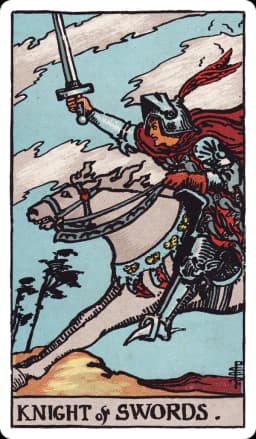
- Knight of Swords — the court's fastest, most combative figure — air's mental sharpness combined with the Knight rank's impulsive forward motion, for better and worse.
- Queen of Cups — often treated as the court's clearest single portrait of emotional maturity — water doubled with water, held with real steadiness rather than simply felt intensely.
Common Questions
Are court cards always people?
Not always — many readers treat them as a specific energy or temperament active in a situation rather than a literal person, especially in readings not focused on relationships or workplace dynamics. Context and the surrounding cards usually make clear which reading fits better.
What's the difference between a Knight and a King of the same suit?
The Knight represents that suit's qualities actively pursued, often impulsively and not yet fully mastered. The King represents the same suit's qualities at established, confident mastery, directed outward with real skill rather than raw motion.
Why are Queens associated with Water and Kings with Fire in every suit?
It reflects the Golden Dawn's double-element system: Queens carry their own suit's element combined with Water's maturing, internalizing quality, while Kings carry their suit's element combined with Fire's outward, active authority. This is consistent across all four suits, which is part of what makes the 16 courts read as one coherent group.
How do I tell which real person a court card represents?
Look at the rank for their general stage (beginner, pursuer, master, or established authority) and the suit for the domain the card most likely concerns (Wands for ambition, Cups for emotion, Swords for thought or conflict, Pentacles for material matters), then check whether someone in the relevant part of your life matches both.
Can two court cards of the same suit describe conflicting things?
Not usually as a contradiction — a Wands Page and a Wands King, for instance, more often describe the same domain at very different stages, one person just starting out and another with real, established mastery, rather than opposing signals to reconcile. When two same-suit courts appear together, it's generally worth reading them as a developmental range within that suit's territory, since the rank difference is often the whole point of drawing both rather than a conflict needing to be resolved.